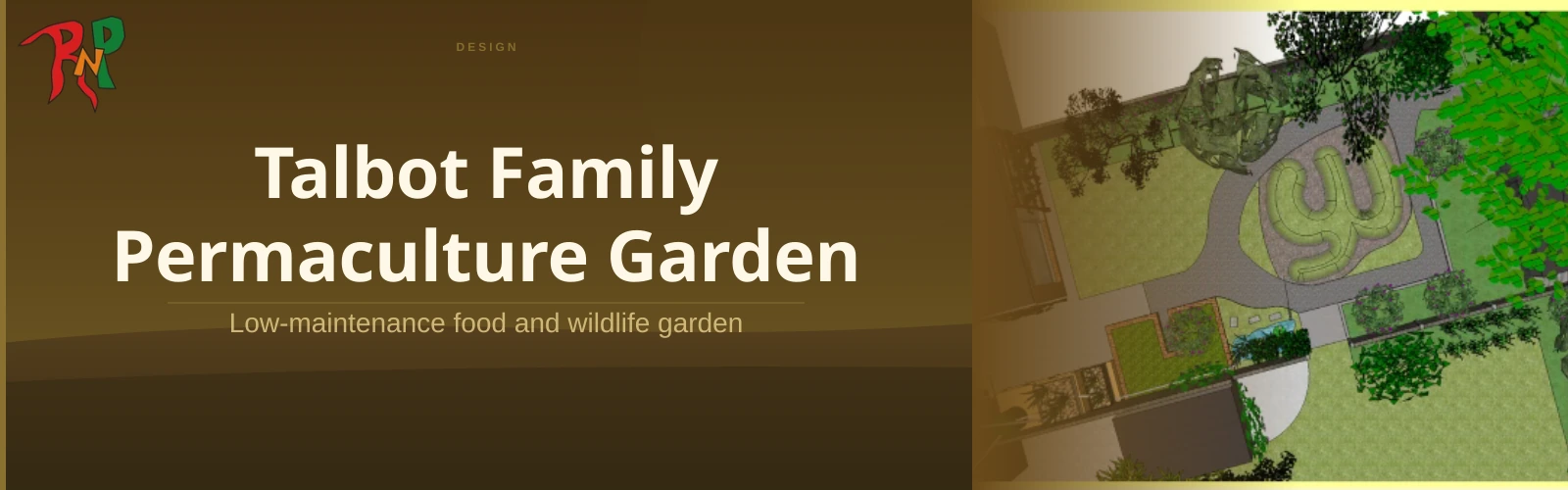
Overview
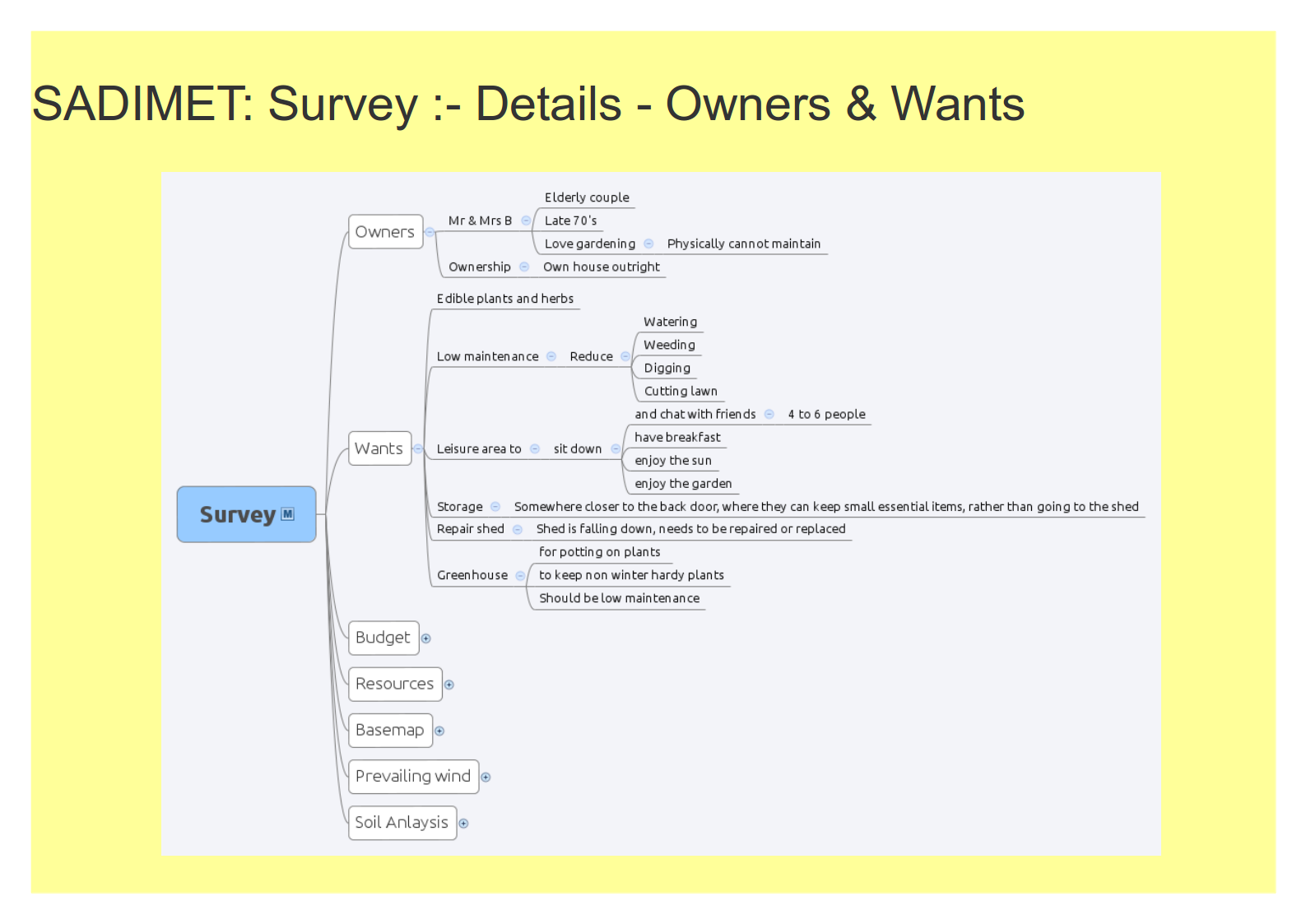
This design was made when my father was still alive. It was for him and my mother, both of whom loved gardening, but were getting too old to dig and manage a garden. So the main goal was to see how to design "work" out of the food growing process. Or in other words, how to make the garden truly low maintenance. At the time, I knew I was only ever going to be able to work on the garden 5 to 10 days a year (to make and to manage), so that was also a major consideration. My parents also loved nature, watching birds and insects in the garden, so that made it very easy to design as a permaculture garden.
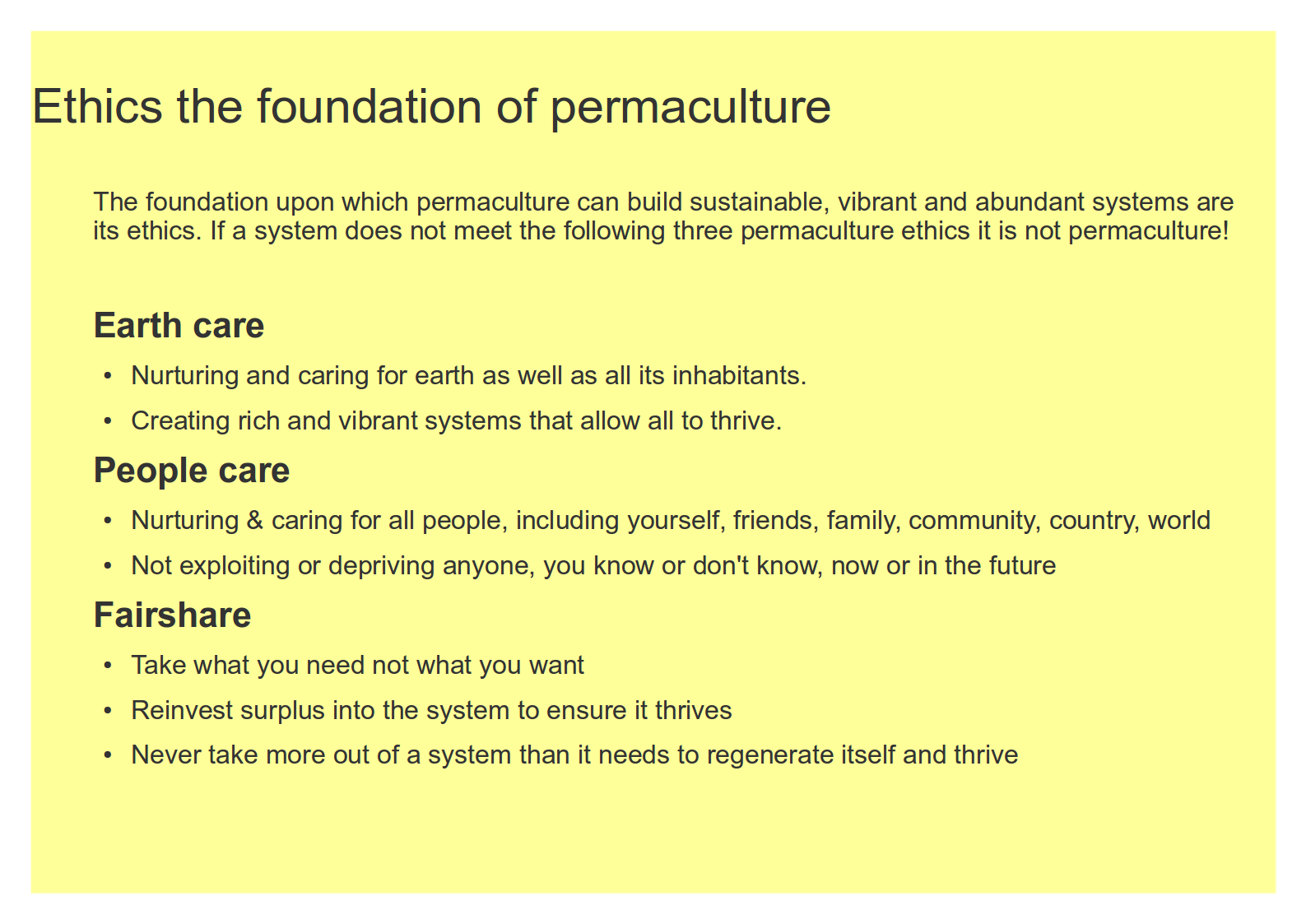
This section introduces the core ideas behind permaculture working with nature rather than against it stacking functions and designing systems that reduce labour while increasing yields.
Choosing a Methodology
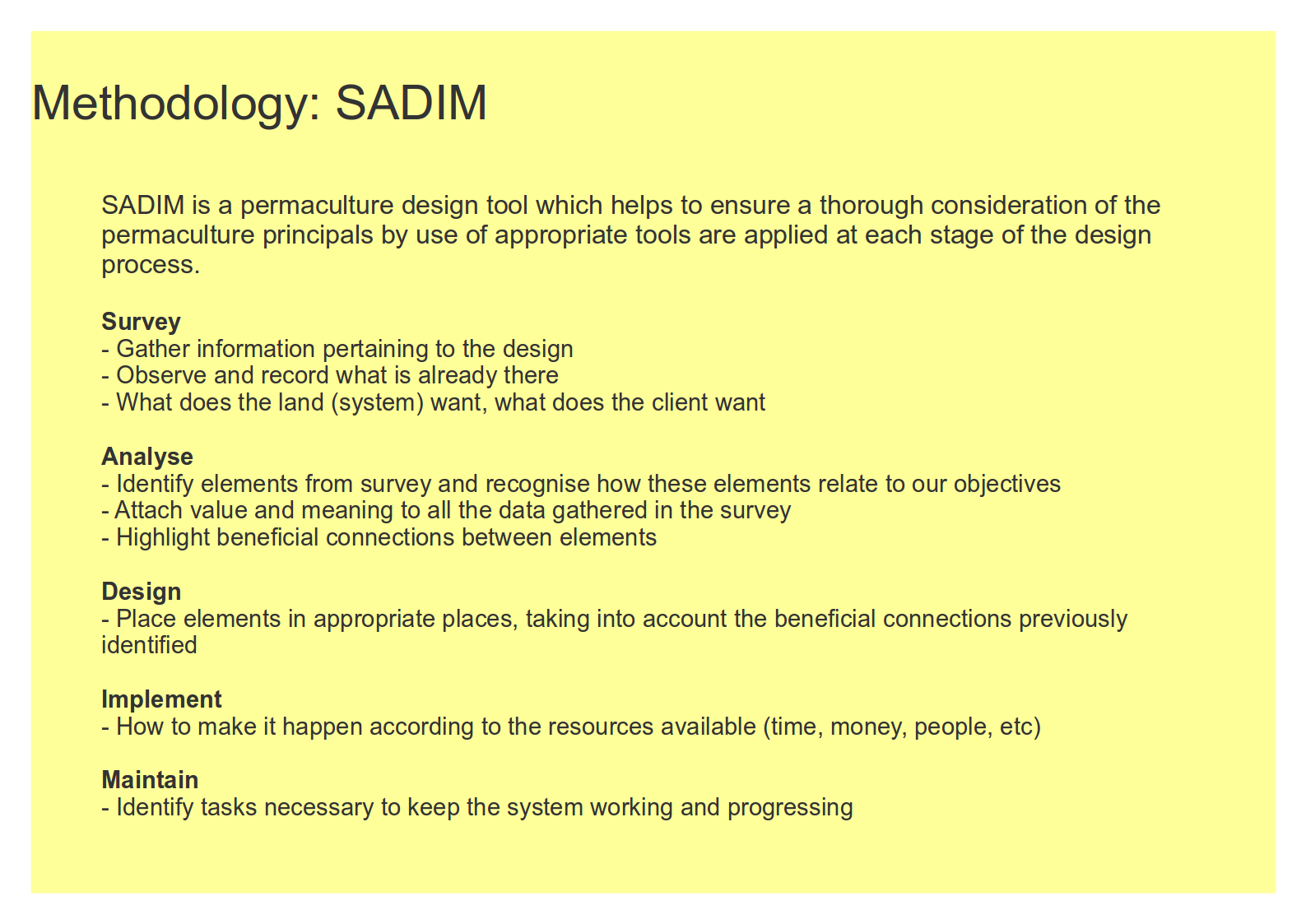
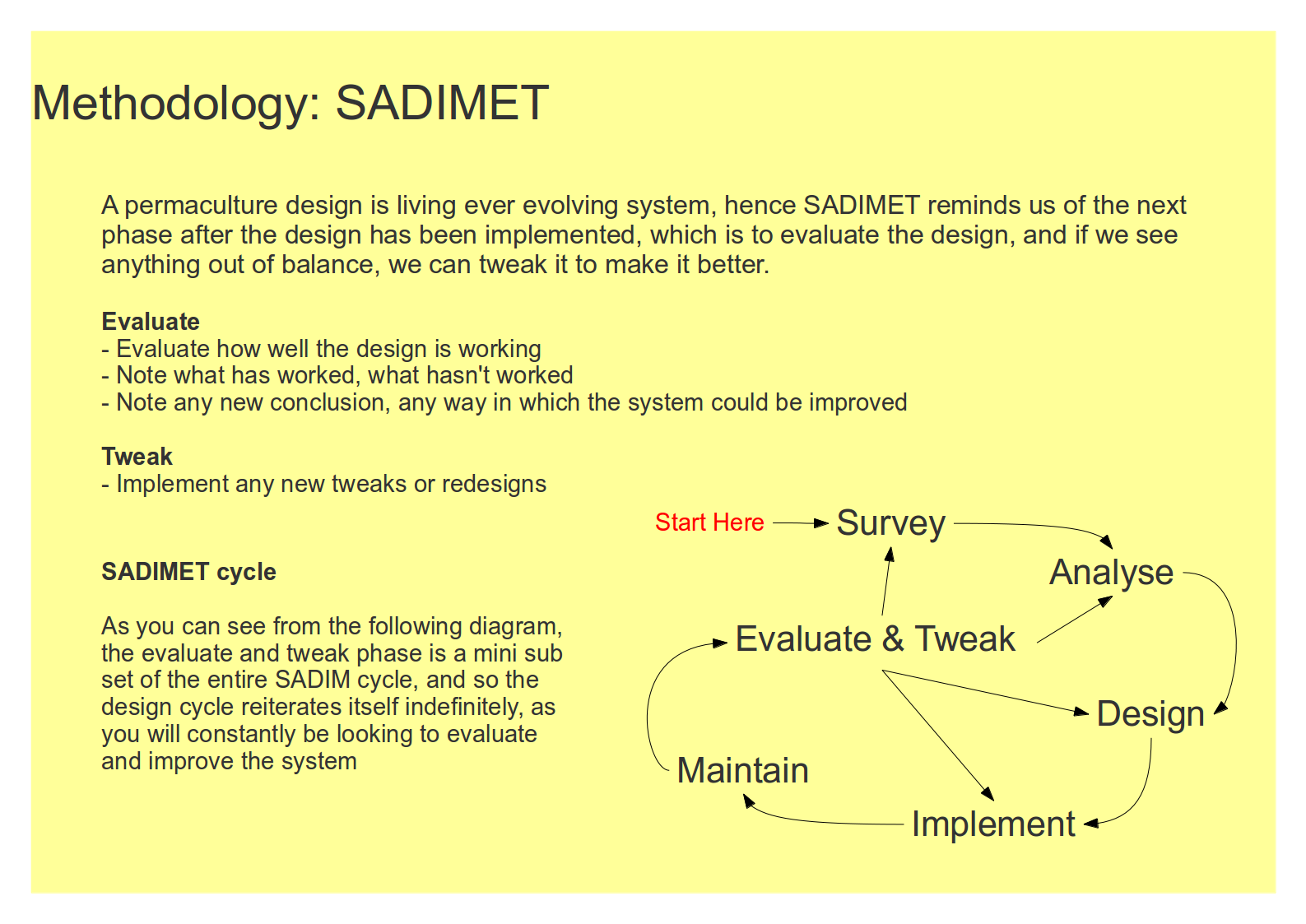
This was one of the first designs I that I was able to design and implement in my own way. On the PDC I took, SADIM was the methodology of choice, so given I had not experimented with the other methodologies, and given I found SADIM very clear and logical, it was the only clear choice at the time.
Note on This Published Design
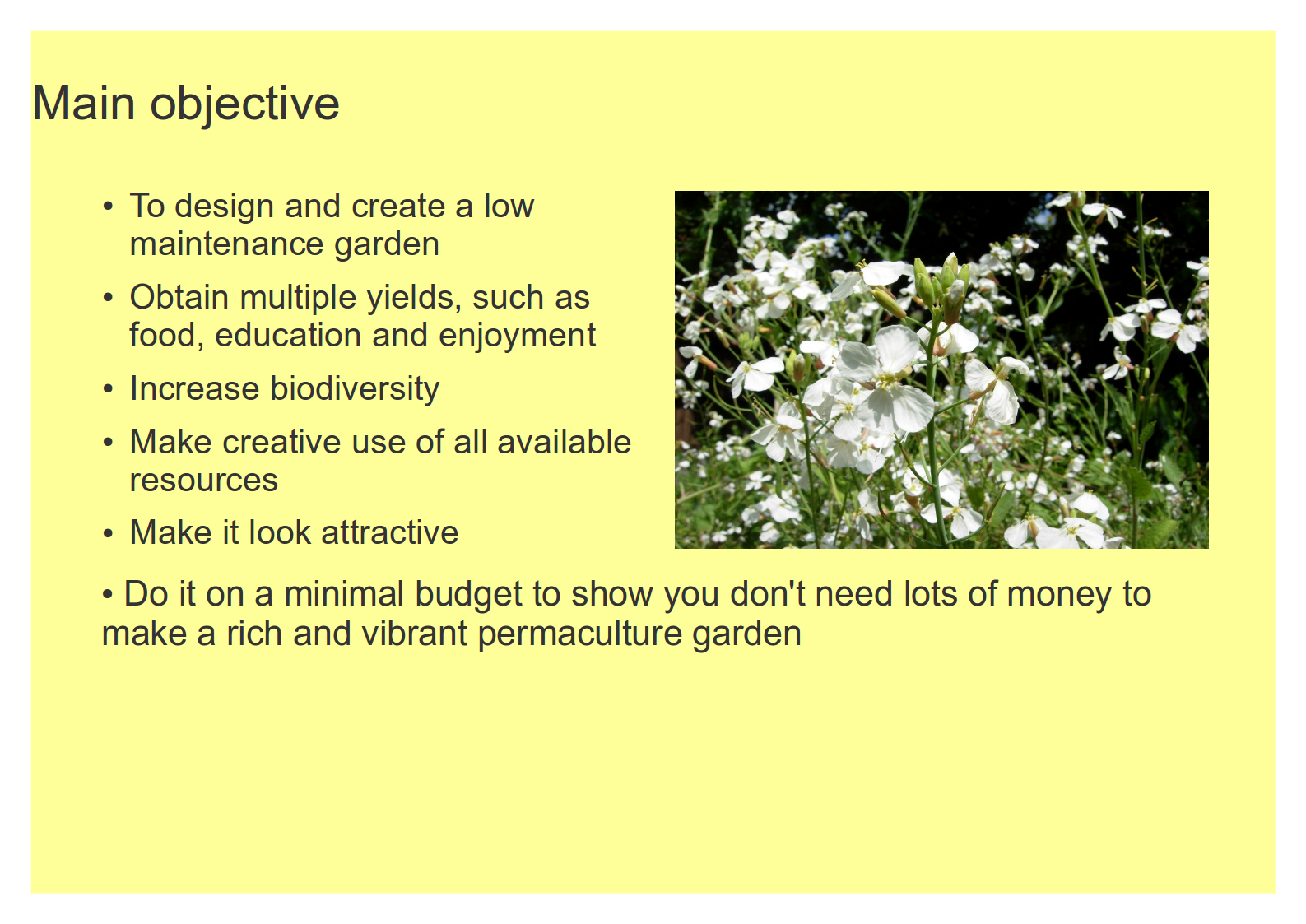
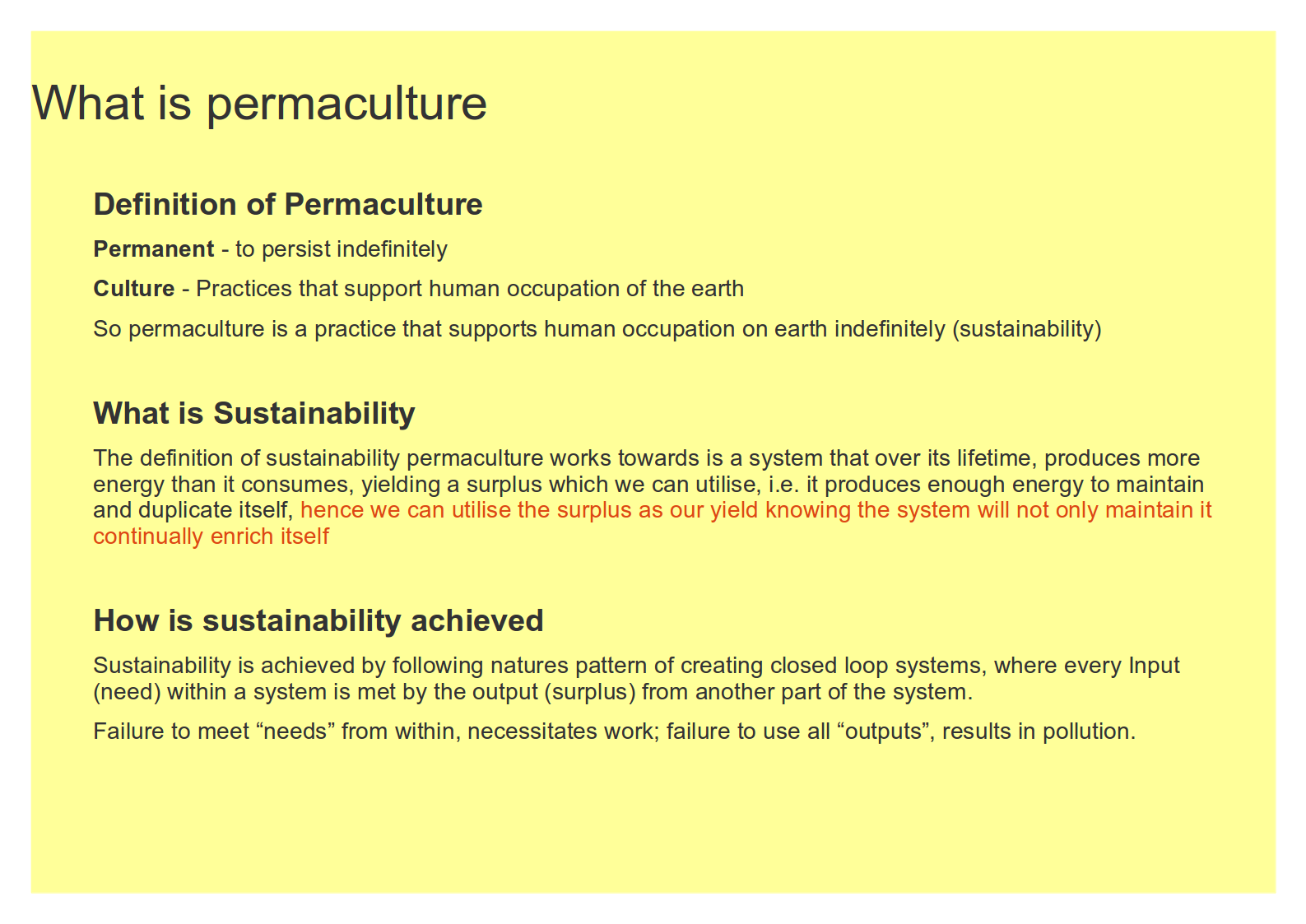
As discussed in my The dyslexic way of creating permaculture documentation design, I collated a lot of information for many of my designs, and made presentations from some of them. This is a presentation I occasionally use when introducing permaculture and permaculture design to people with no permaculture knowledge, hence it starts with the basics.
To avoid duplicating effort, I have taken the slide show presentation that I made for this design and uploaded it verbatim in this article. It was made a long time ago, and I would probably change some of it now, but it serves as a good reminder for me as to how my design skills have evolved.
Survey
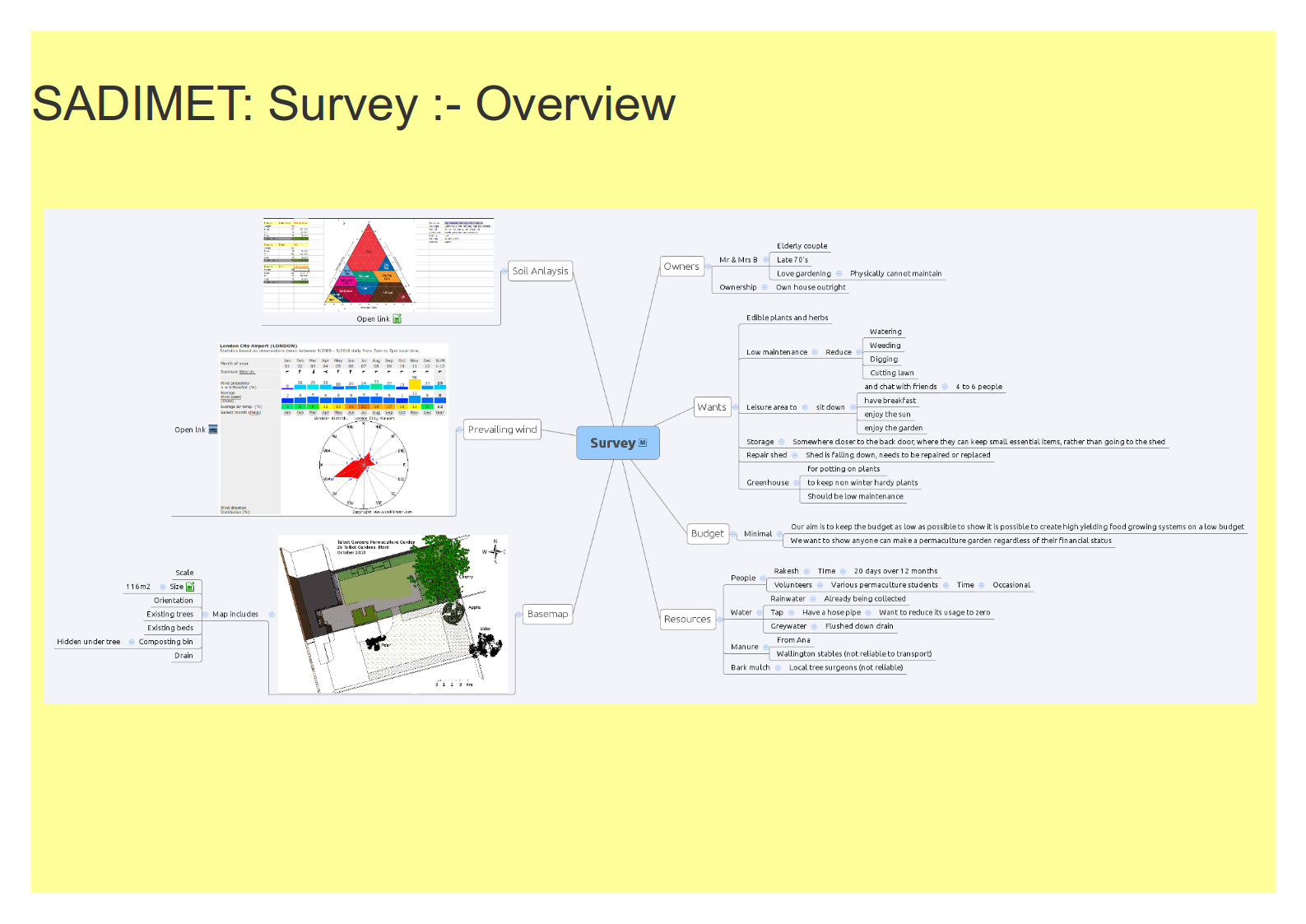
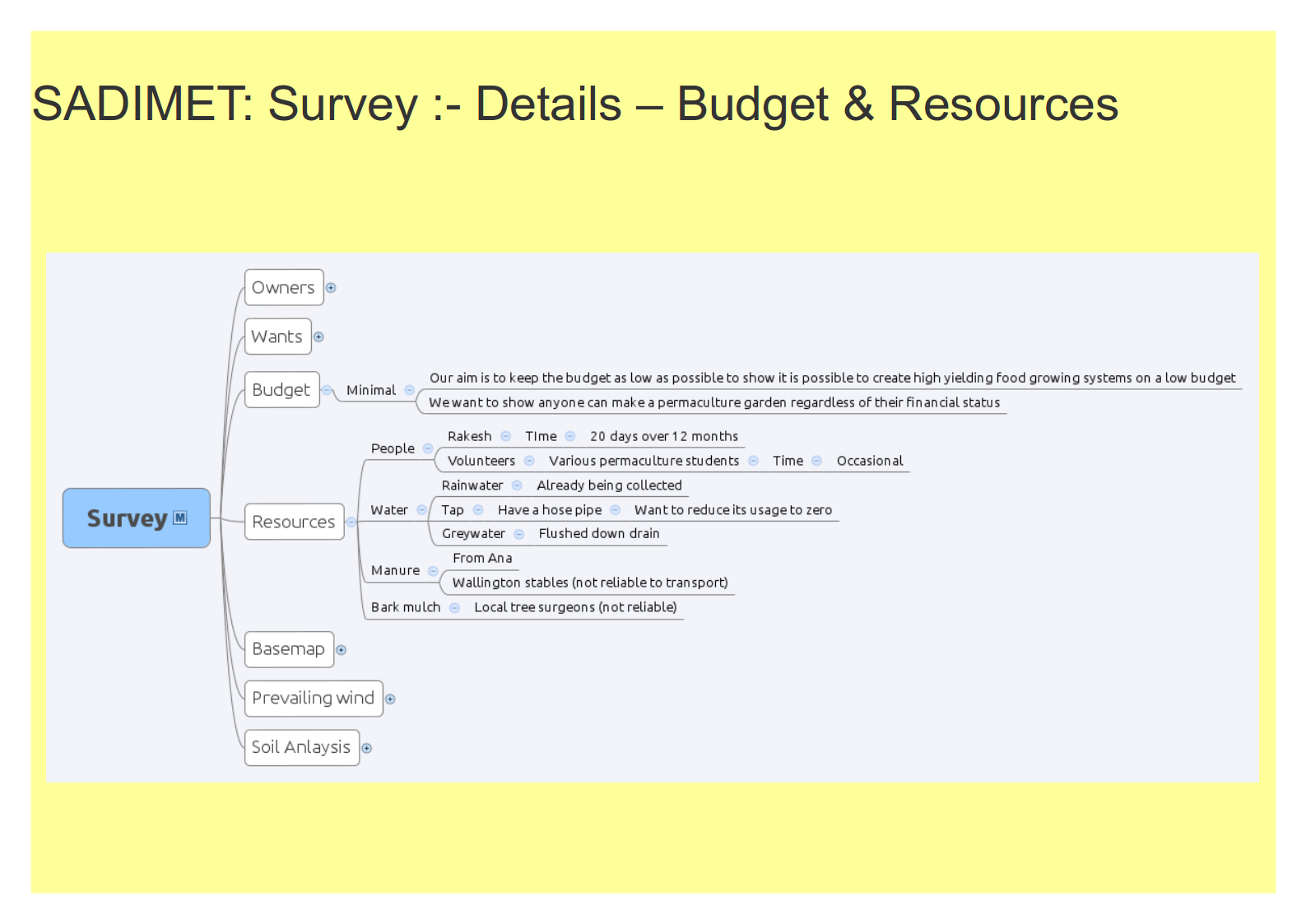
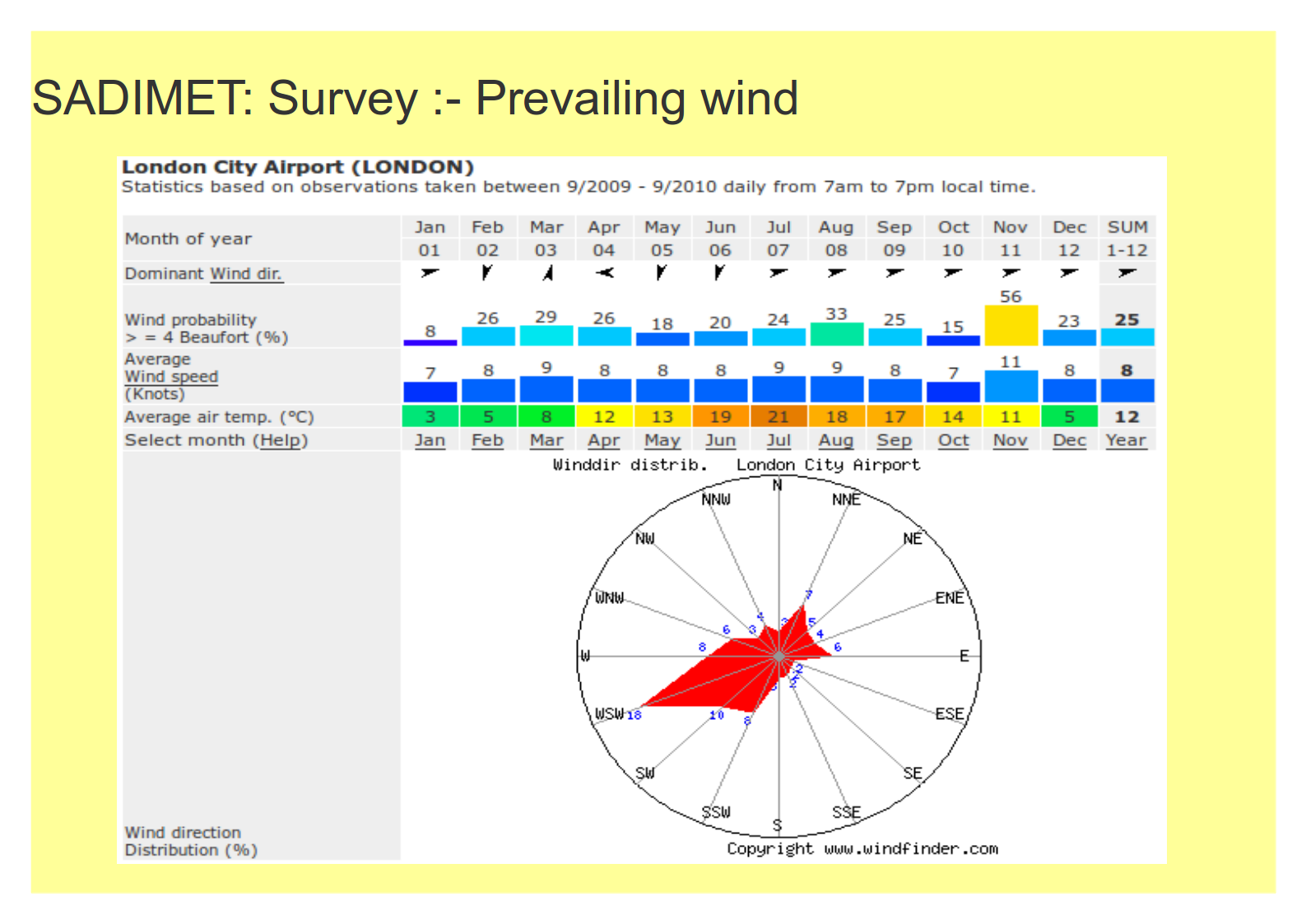
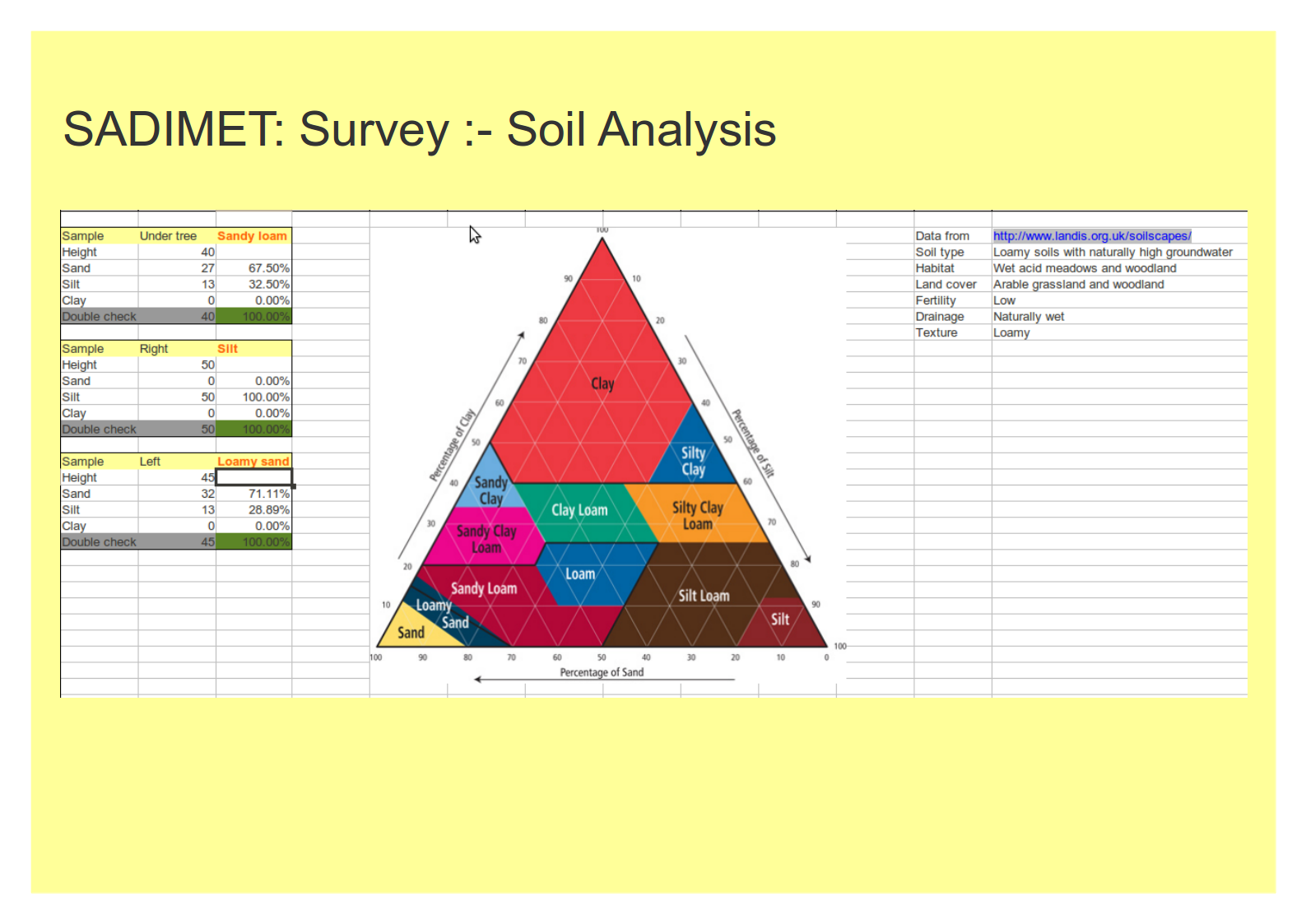
The survey stage focuses on observing the site in detail understanding sunlight patterns soil quality existing vegetation and how water moves through the space.
Analyse
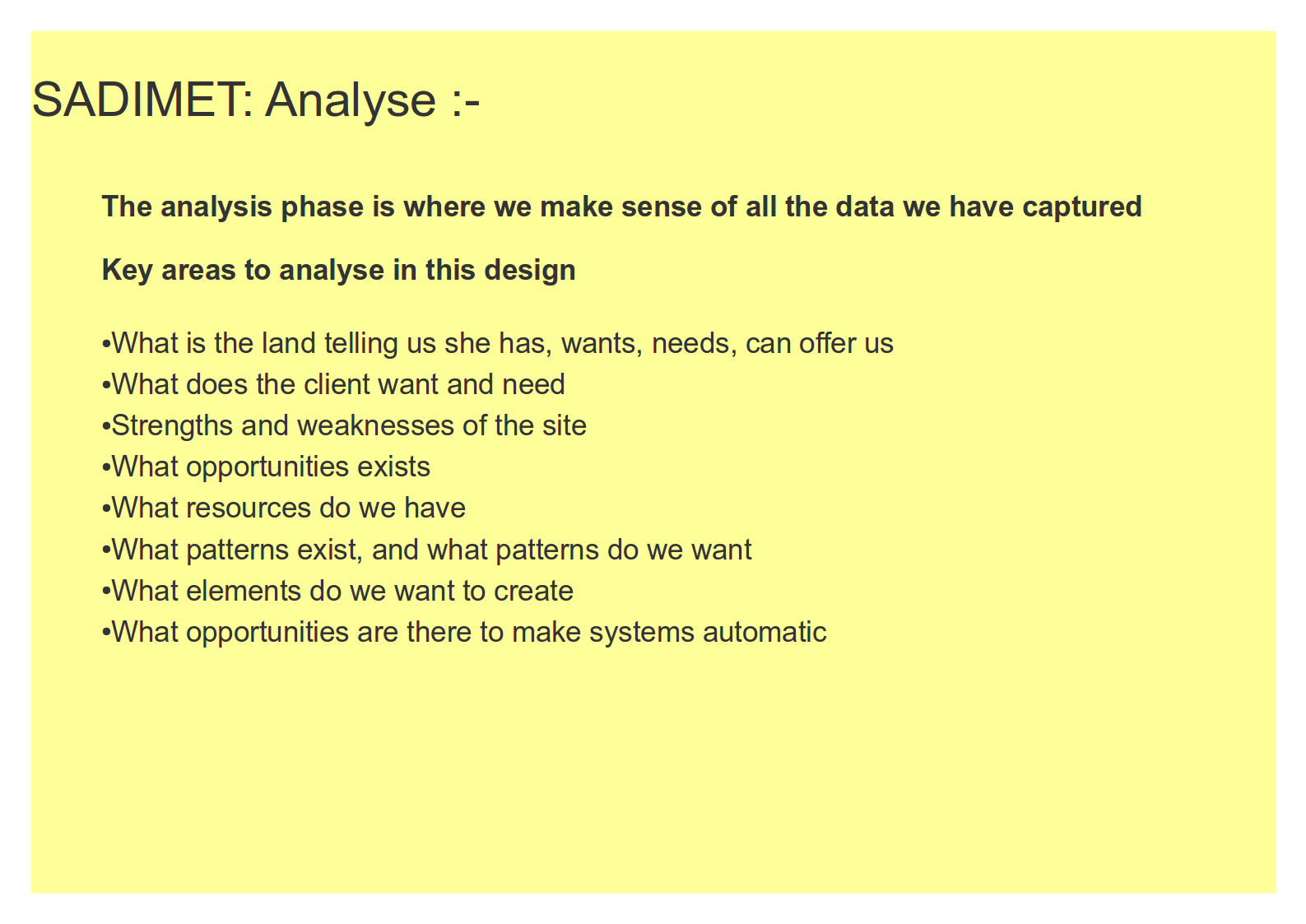
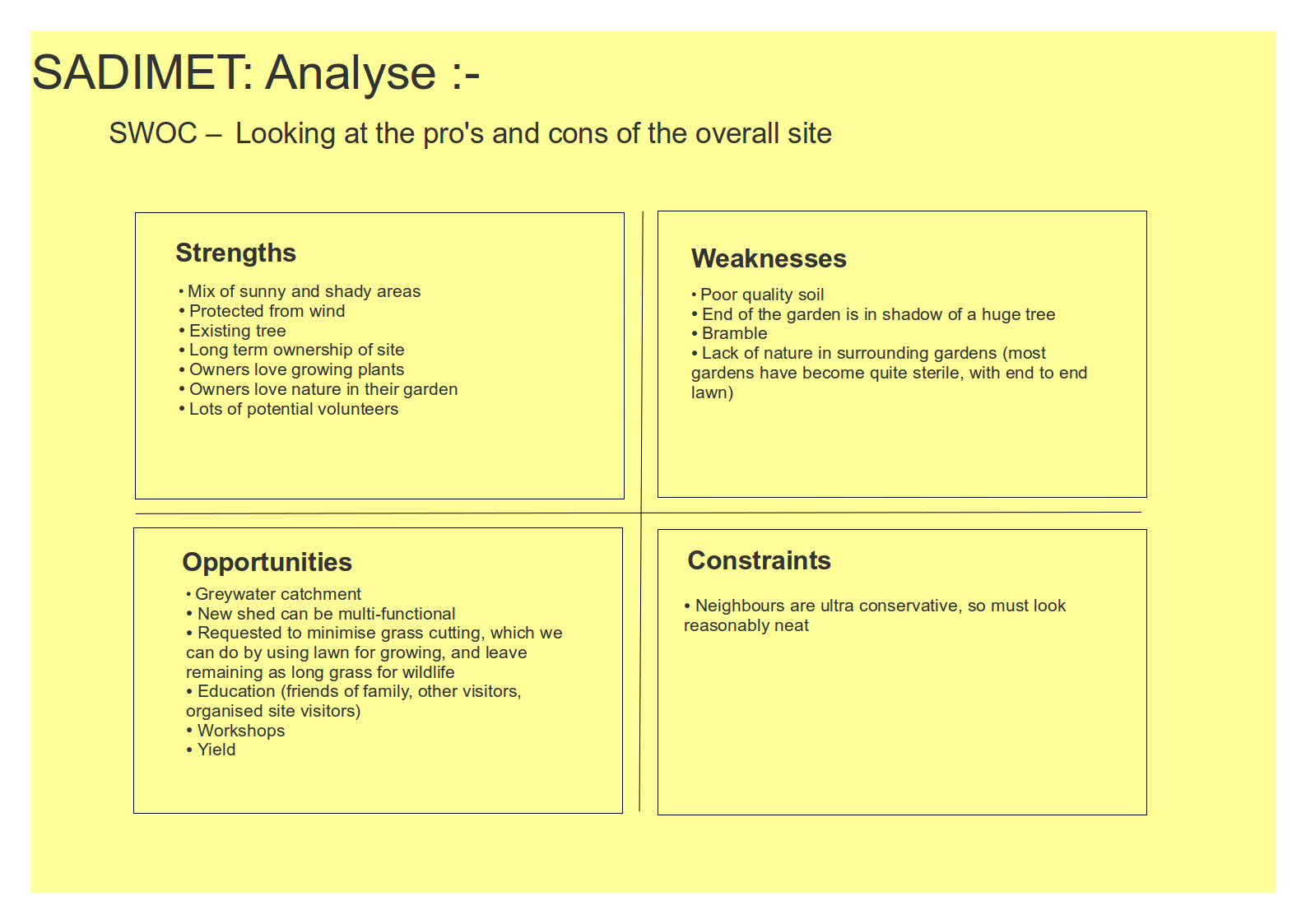
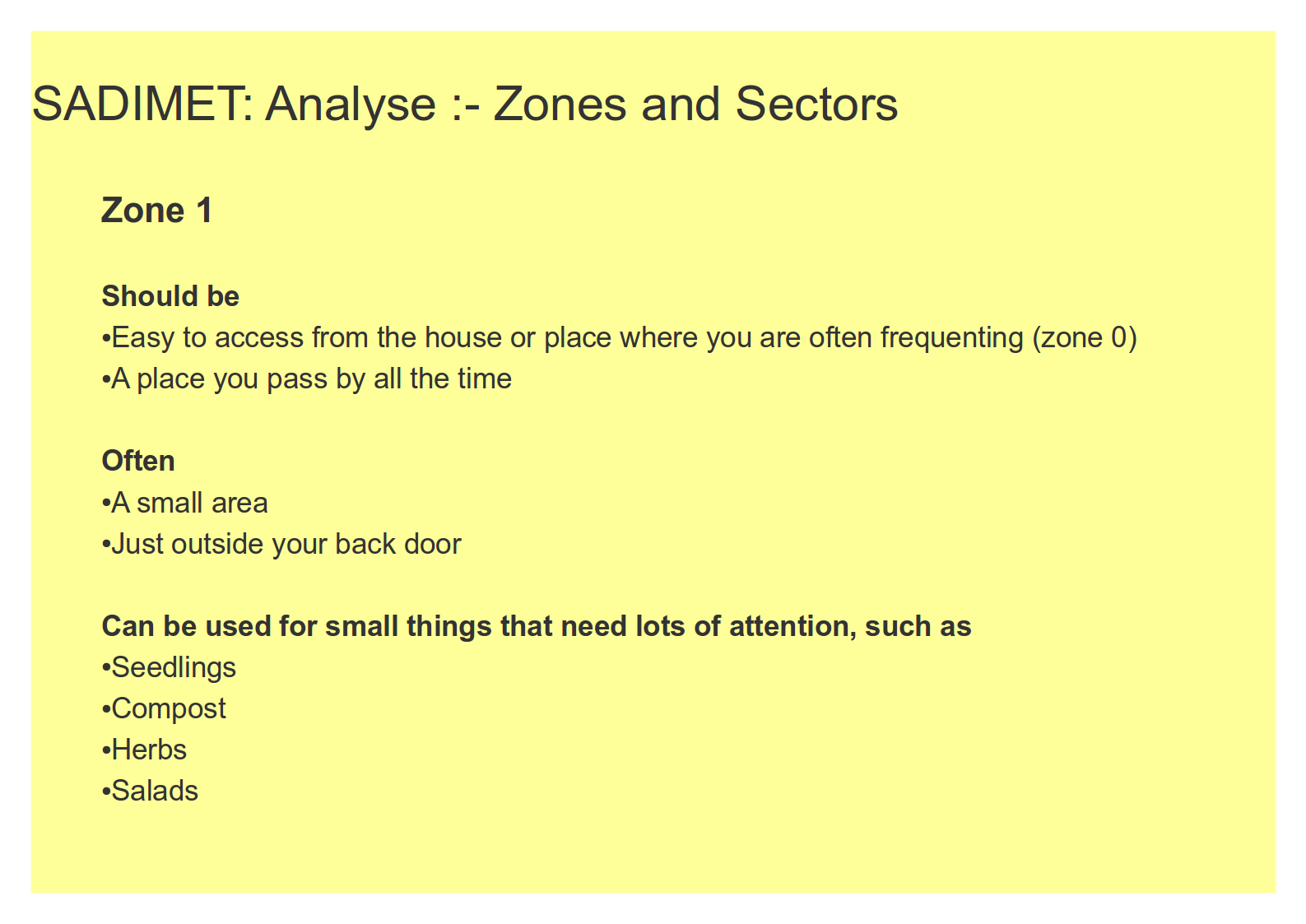
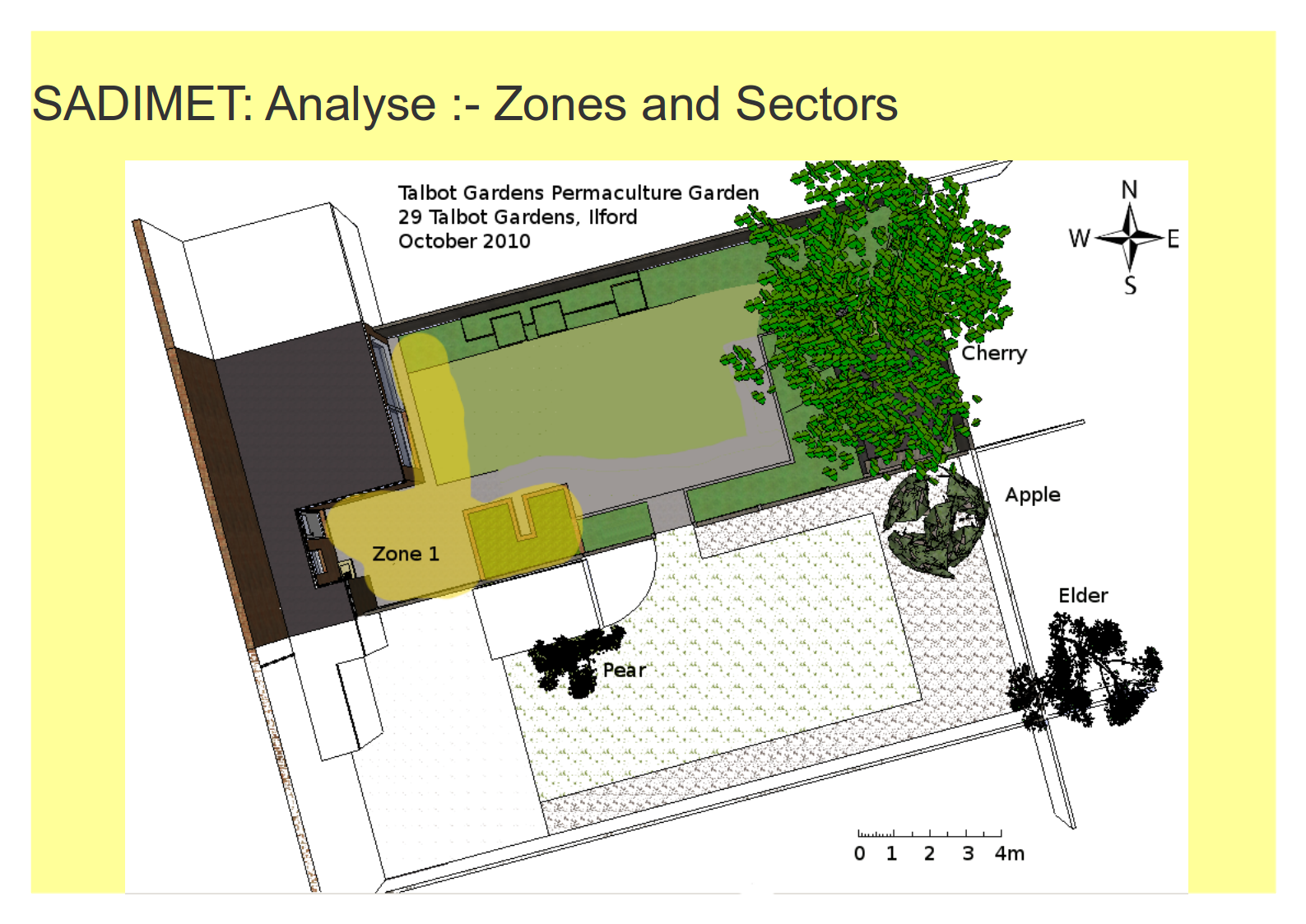
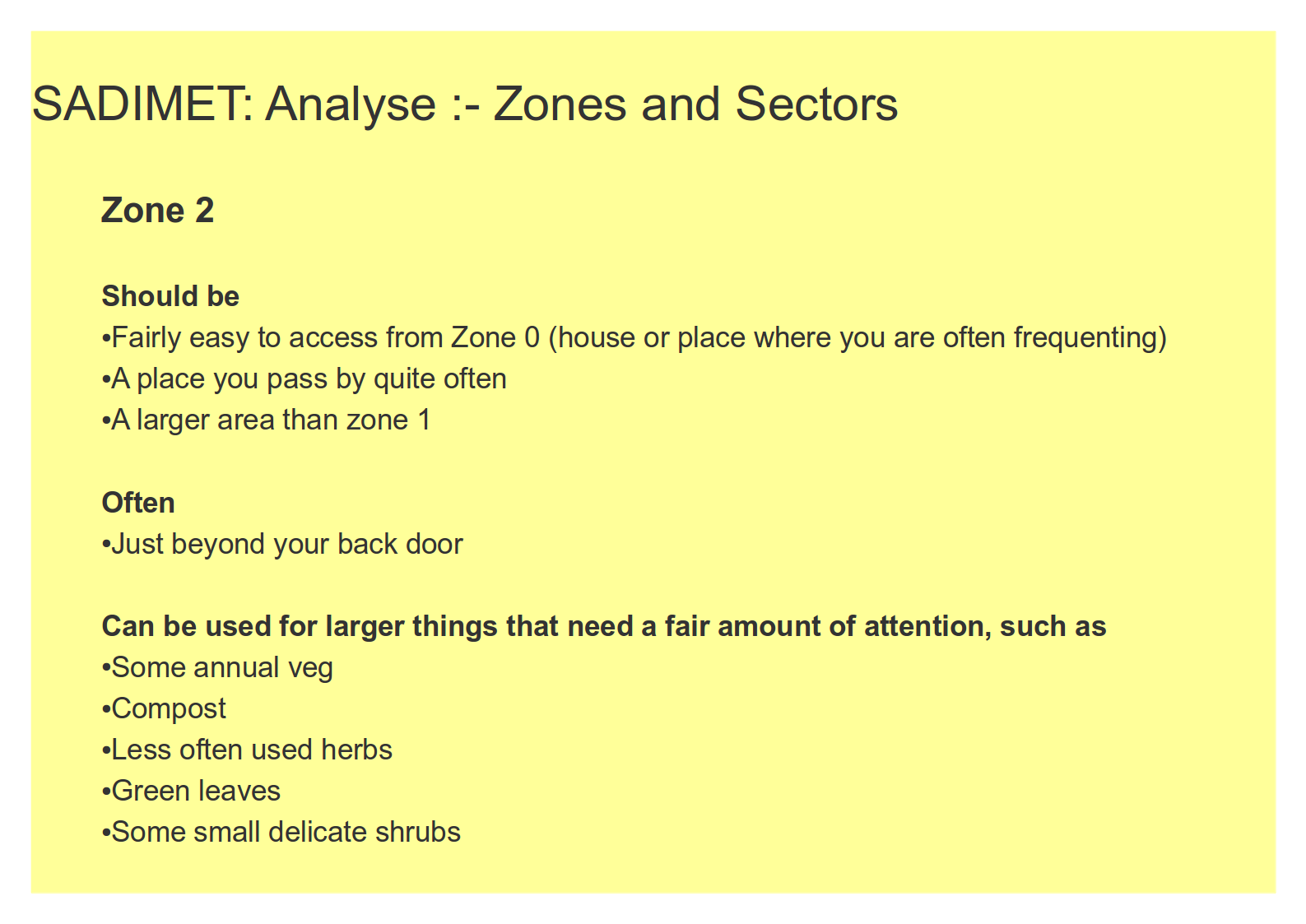
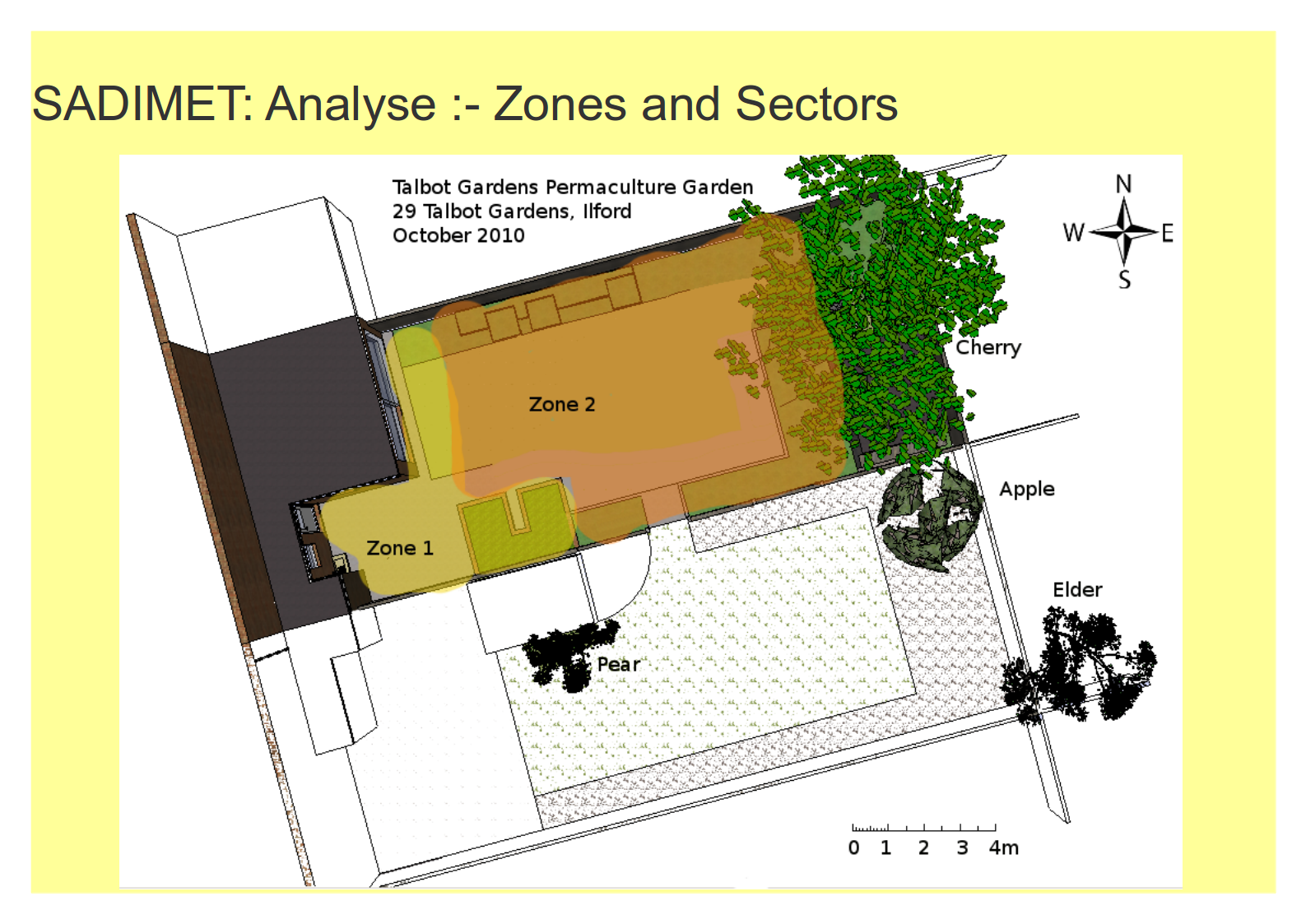
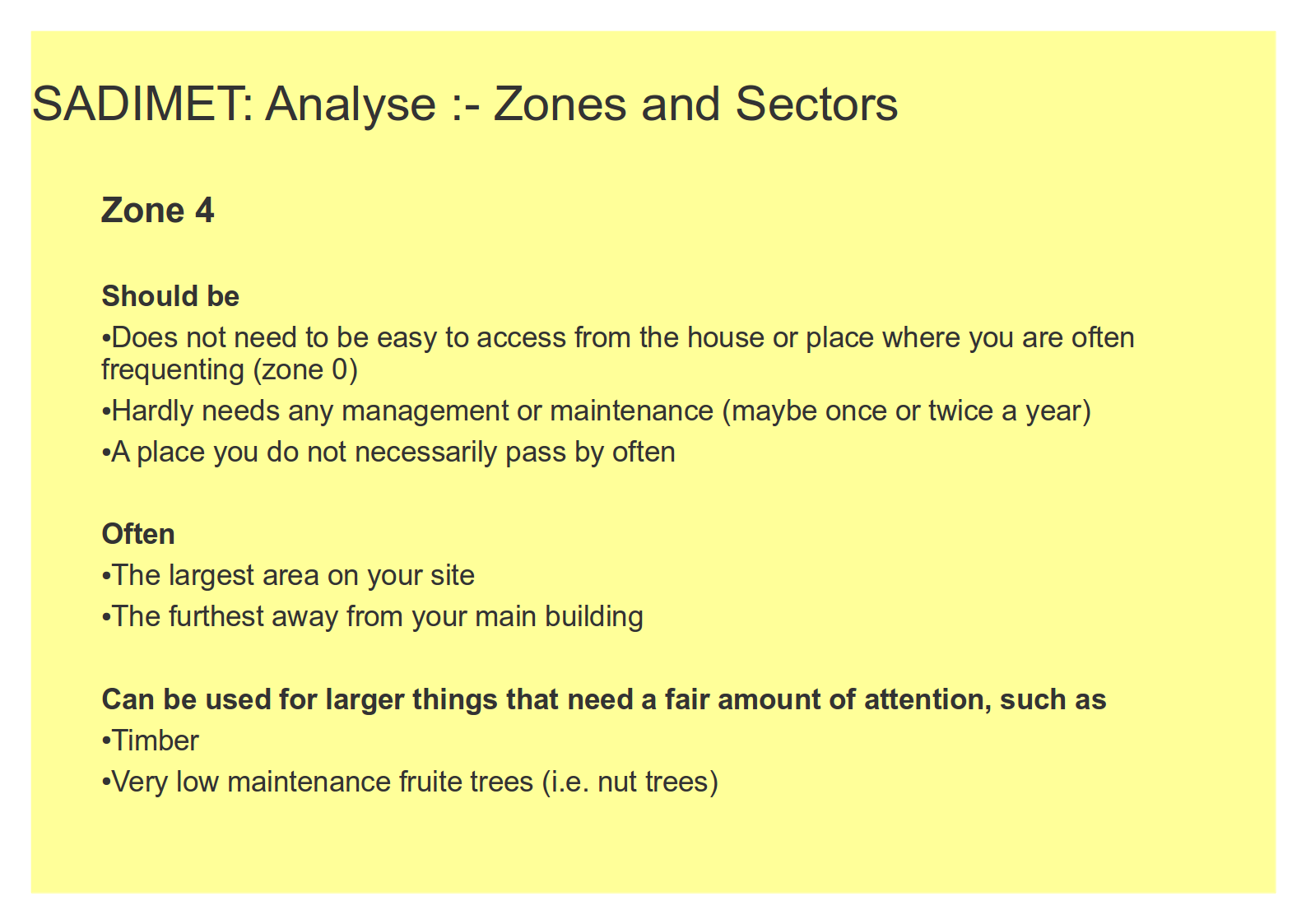
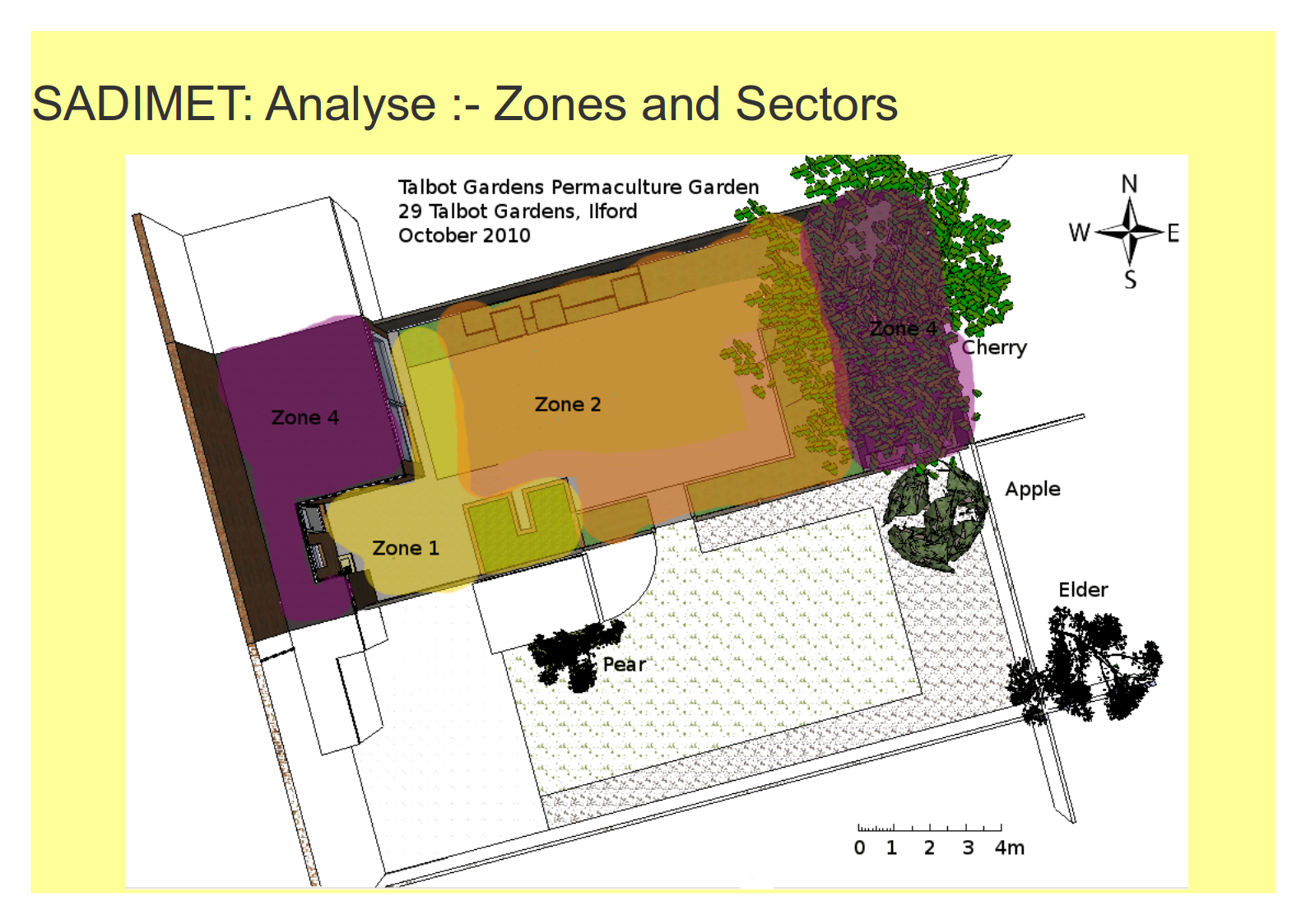
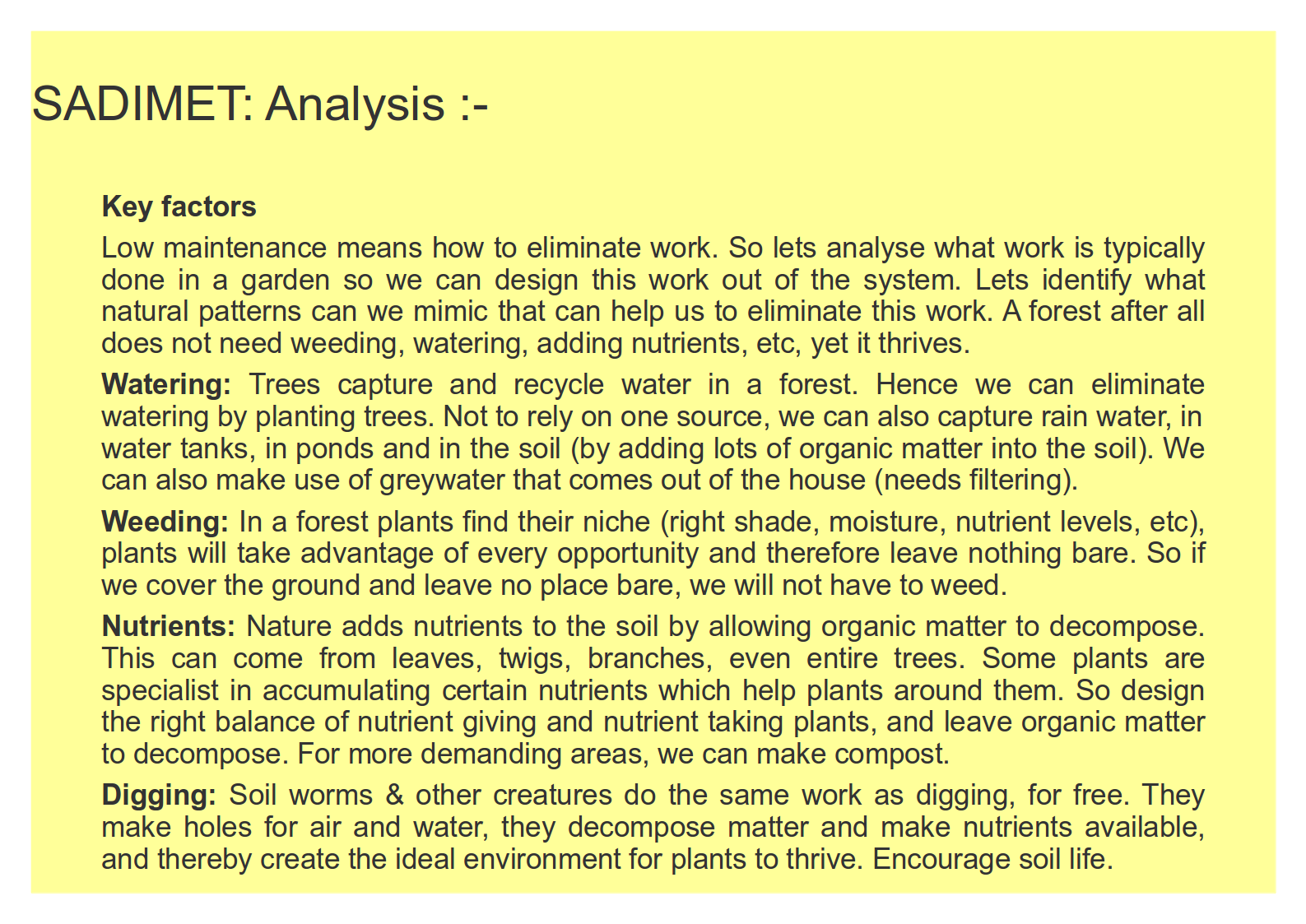
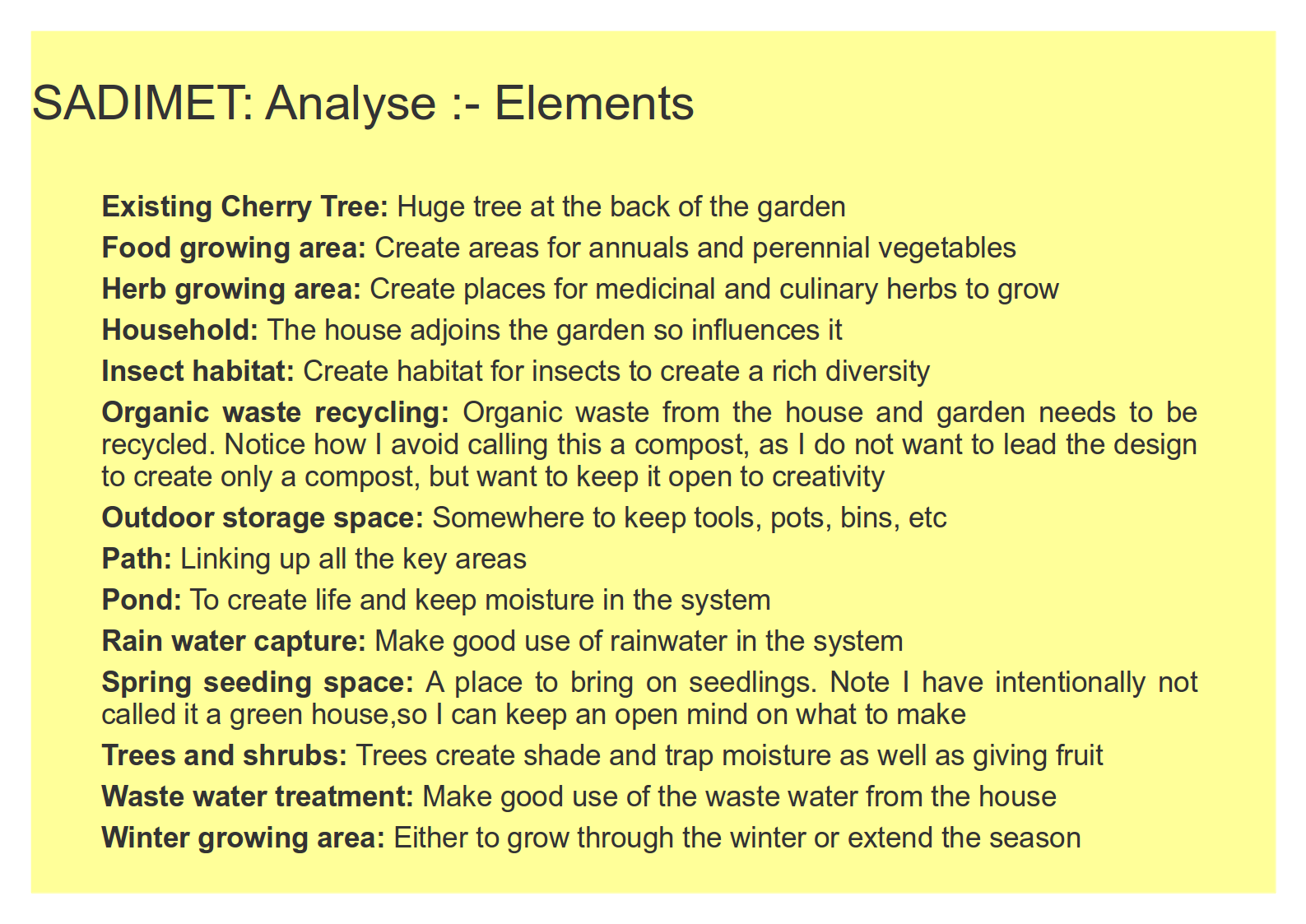
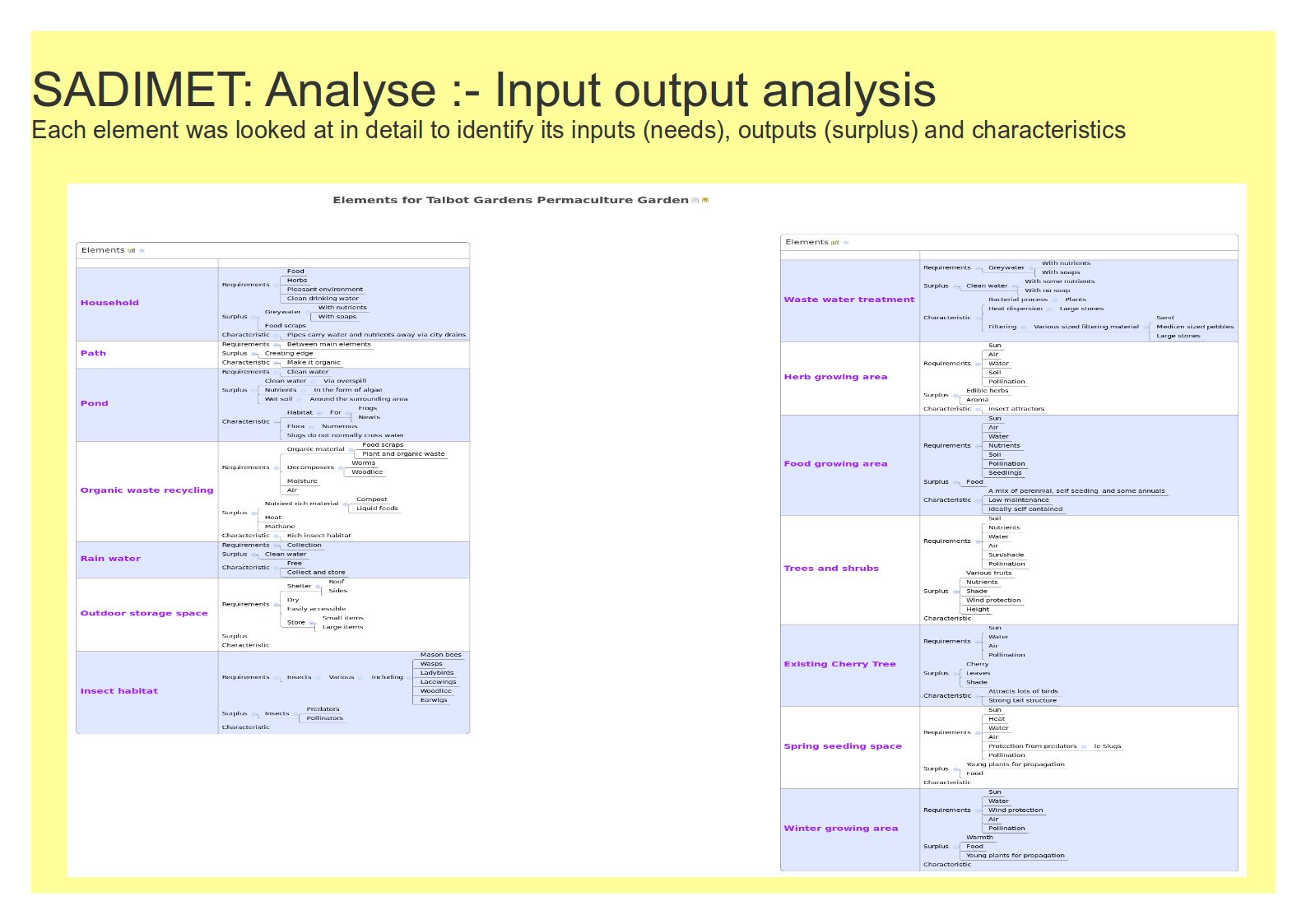
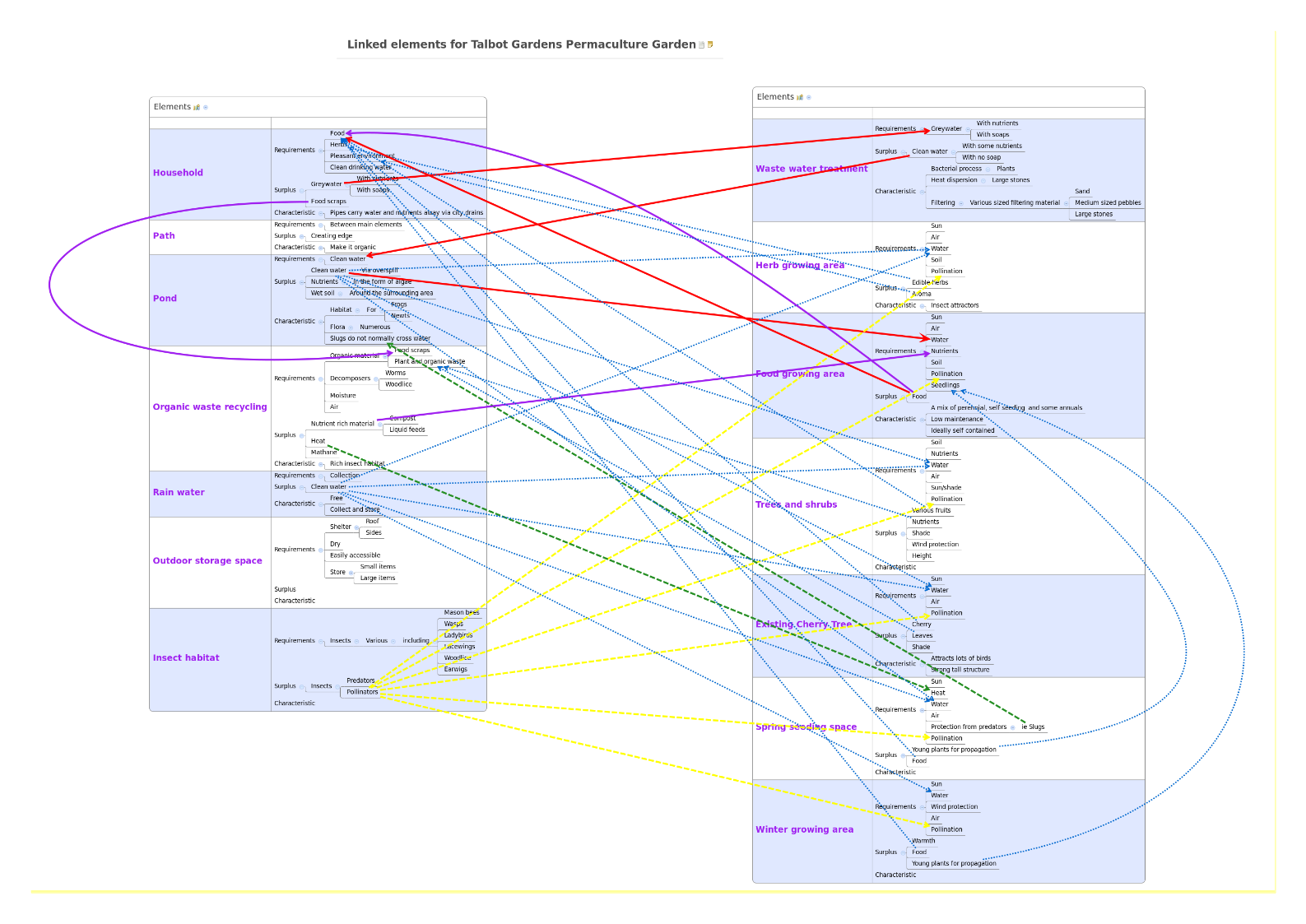
In the analysis phase observations are interpreted relationships mapped and opportunities identified to reduce labour while improving productivity.
Design
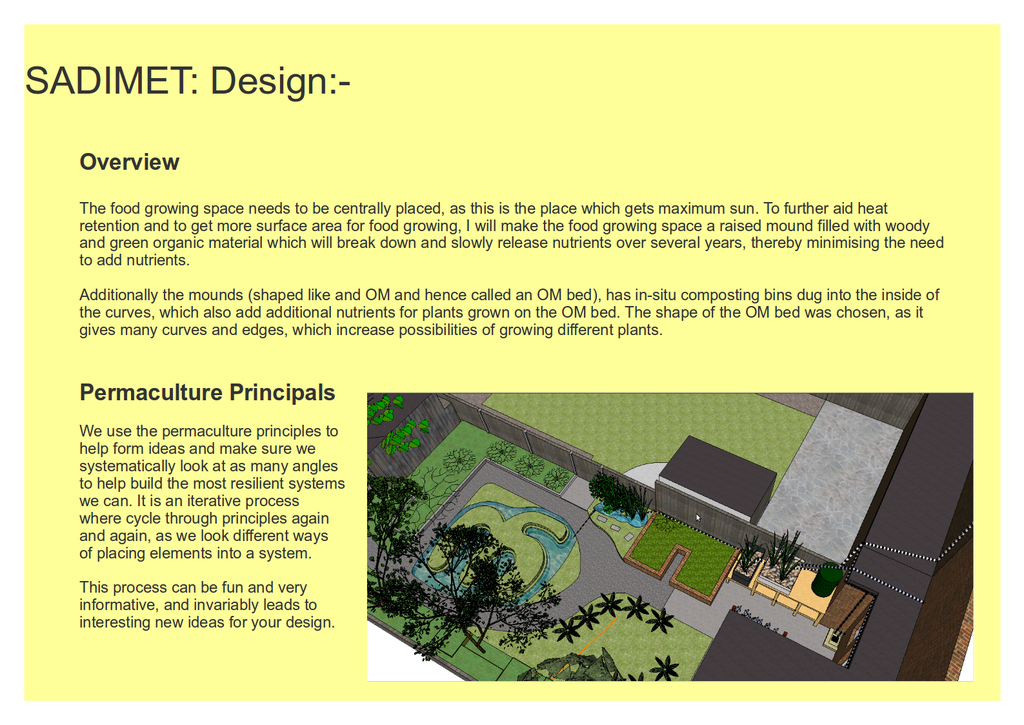
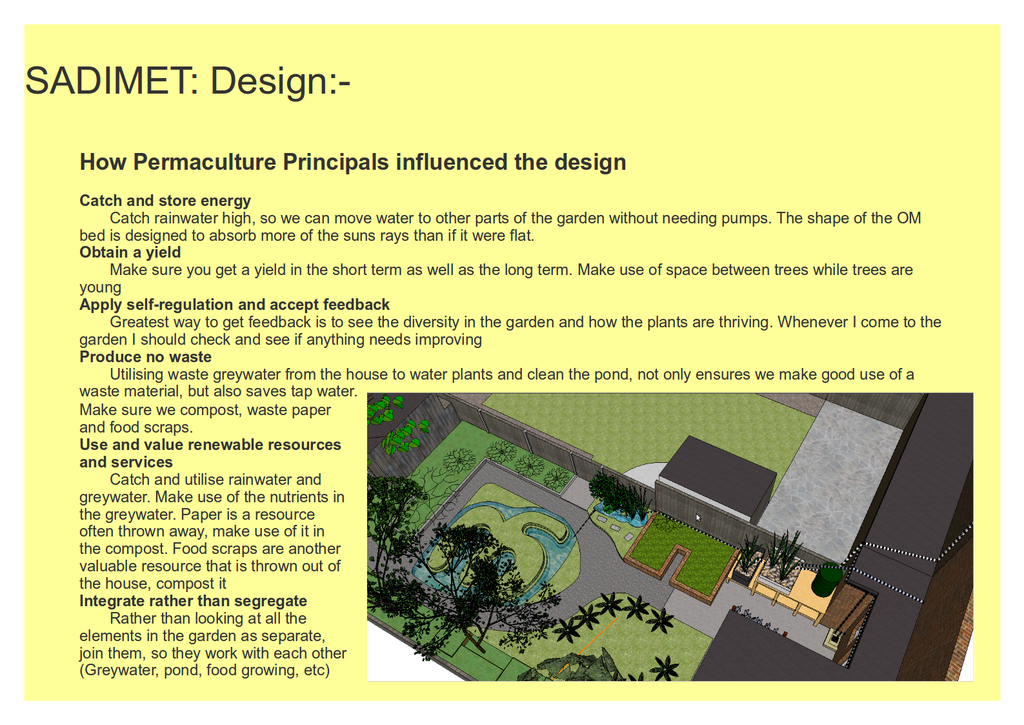
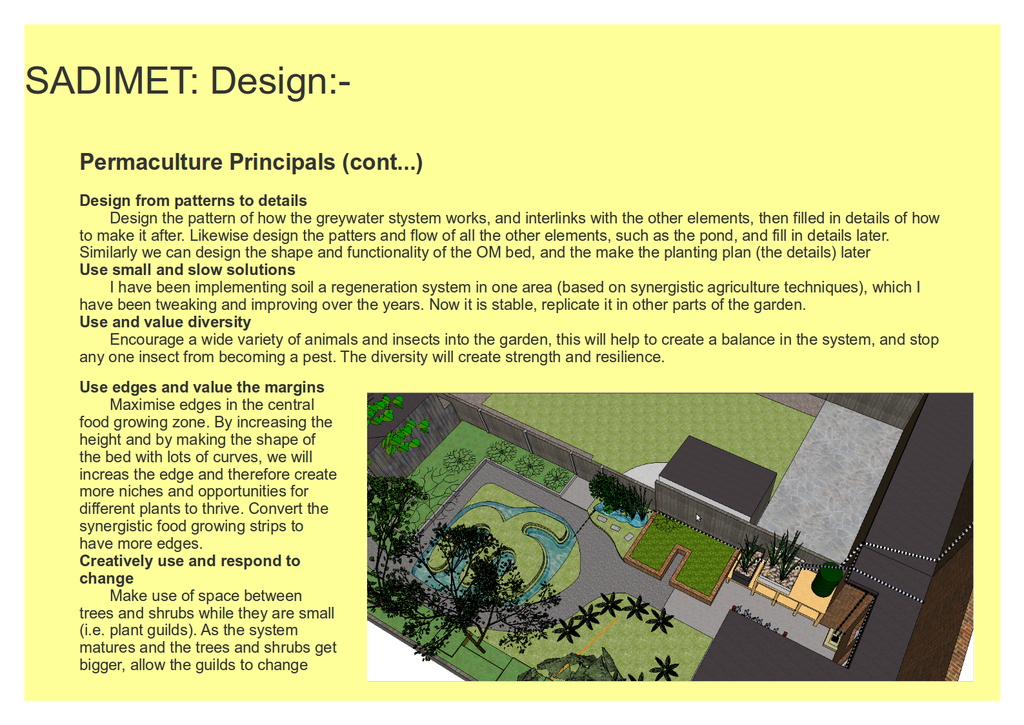
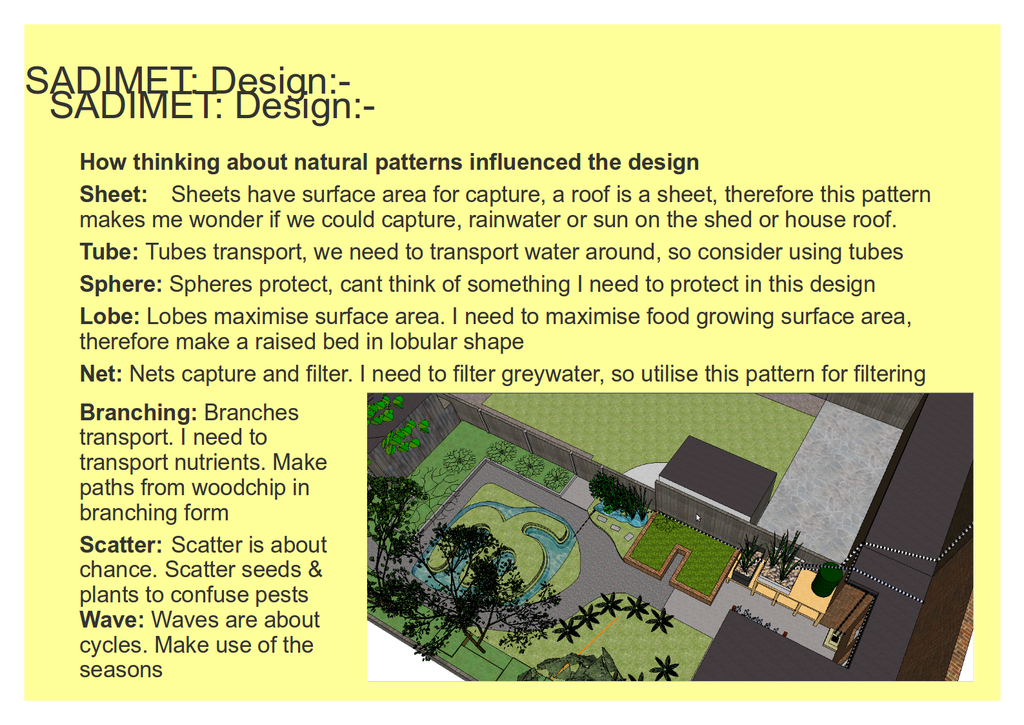
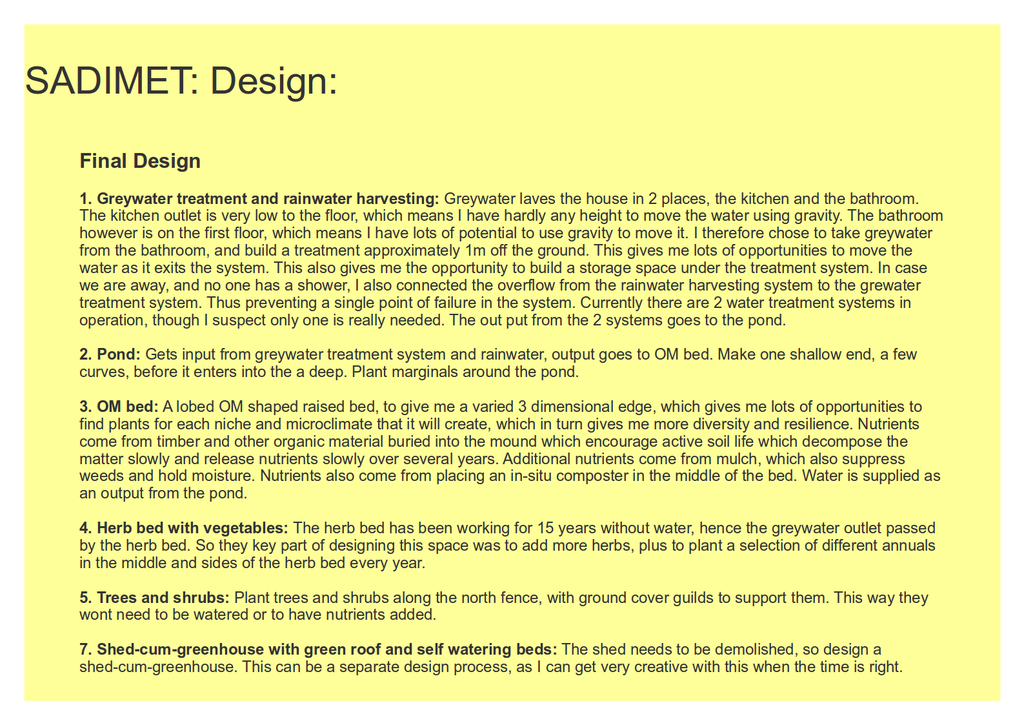
The design stage integrates all findings into a coherent plan prioritising low maintenance systems perennial planting and efficient layout.

Implement
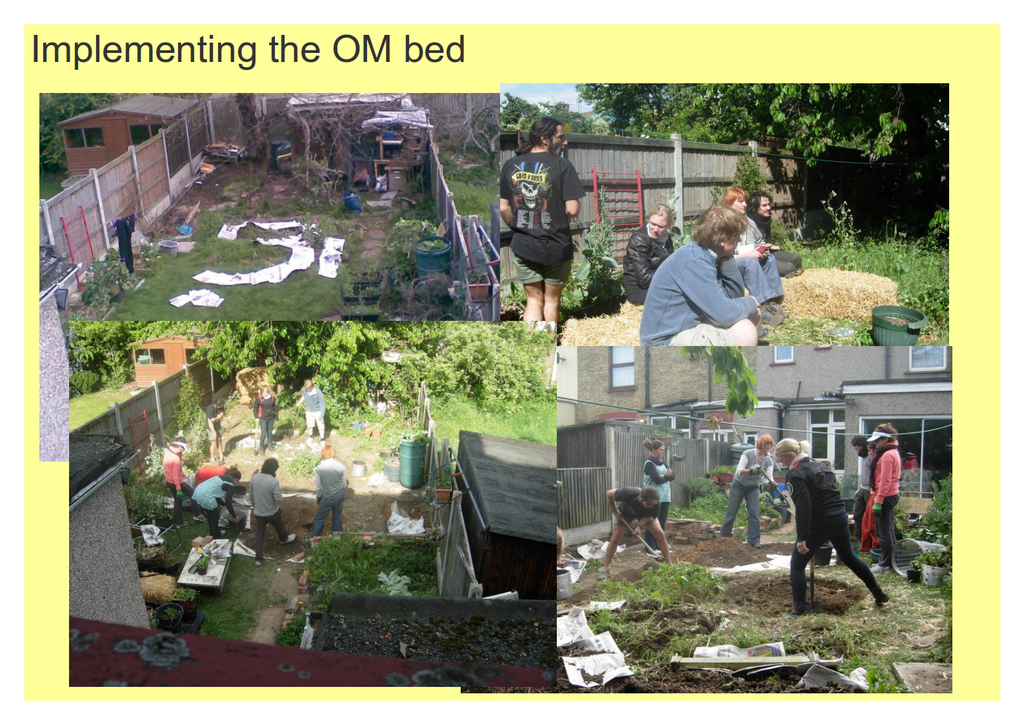
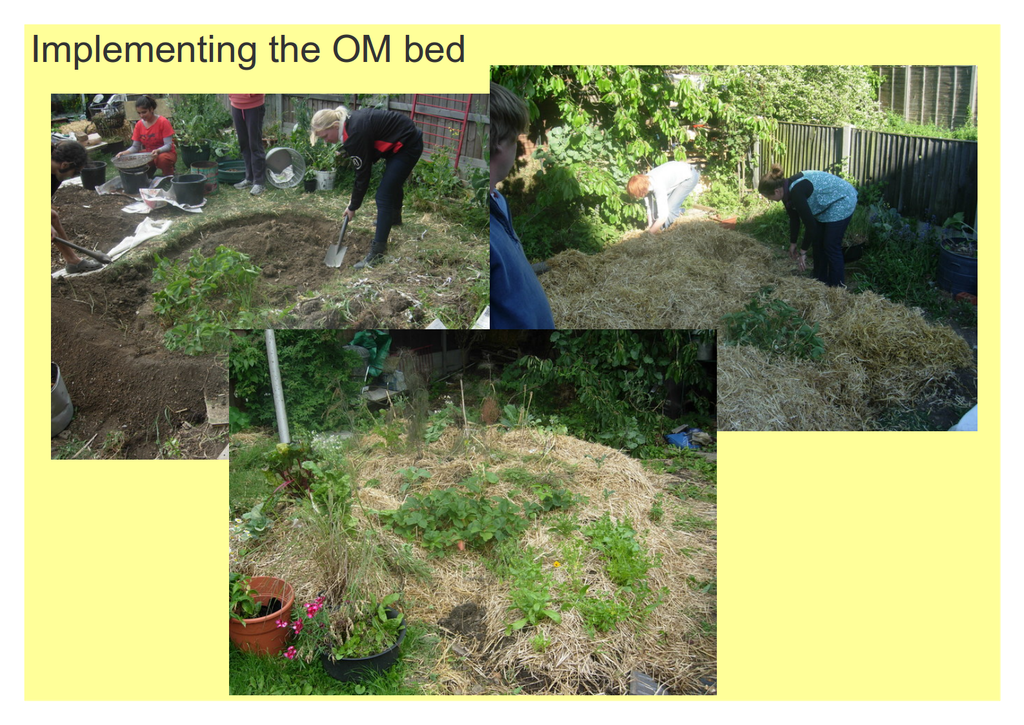
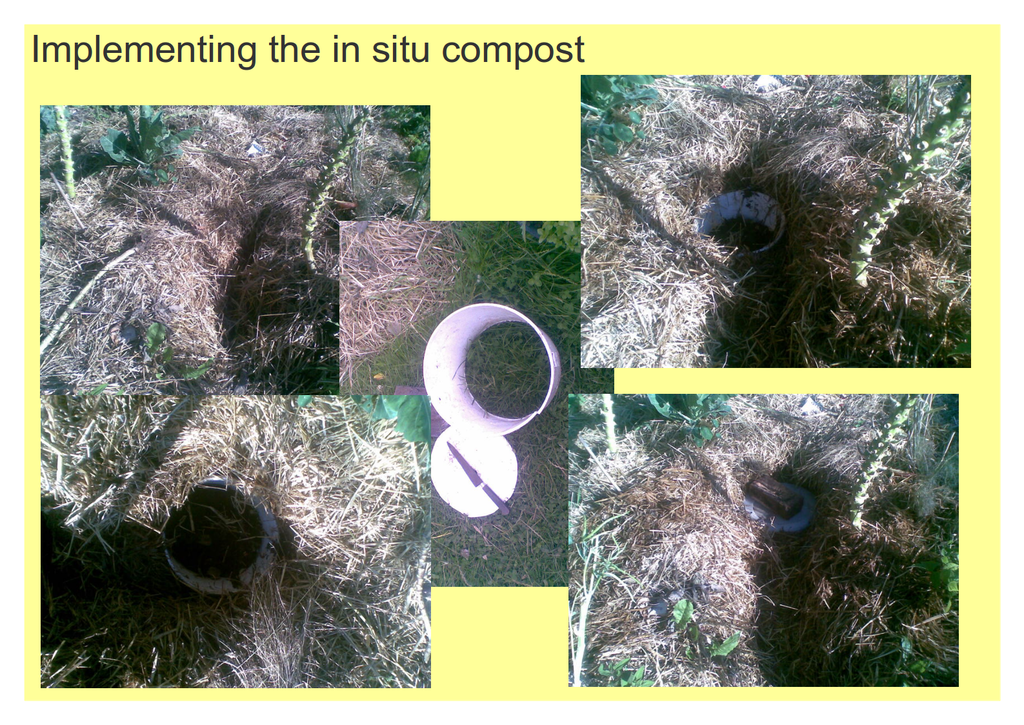
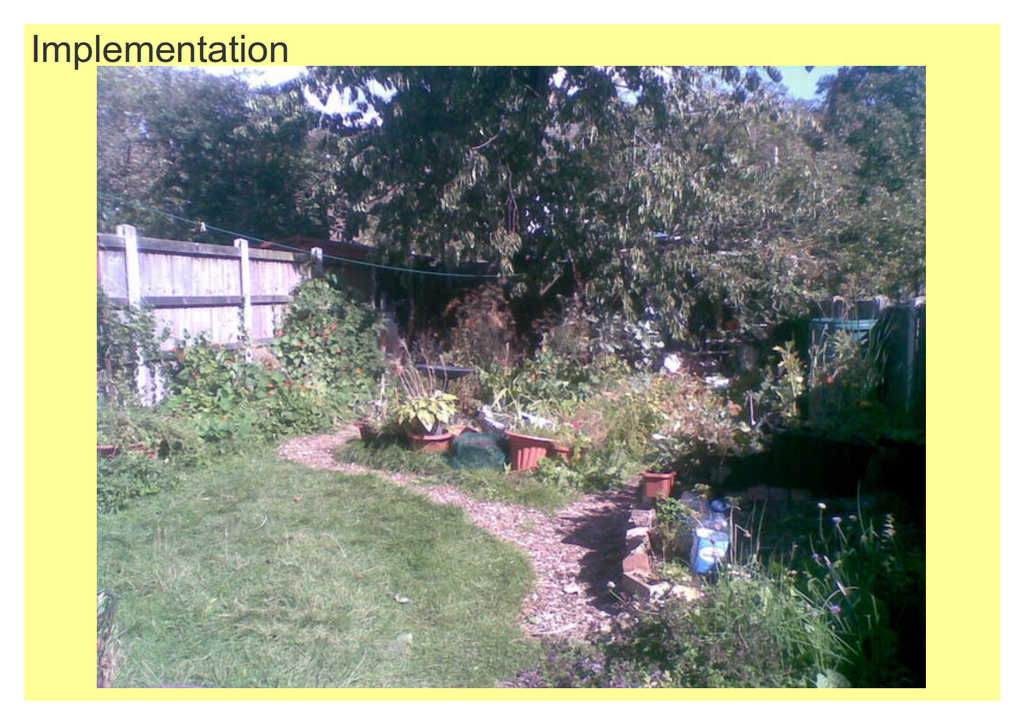
The garden was implemented gradually using mulching perennial planting and minimal disturbance techniques to reduce labour.



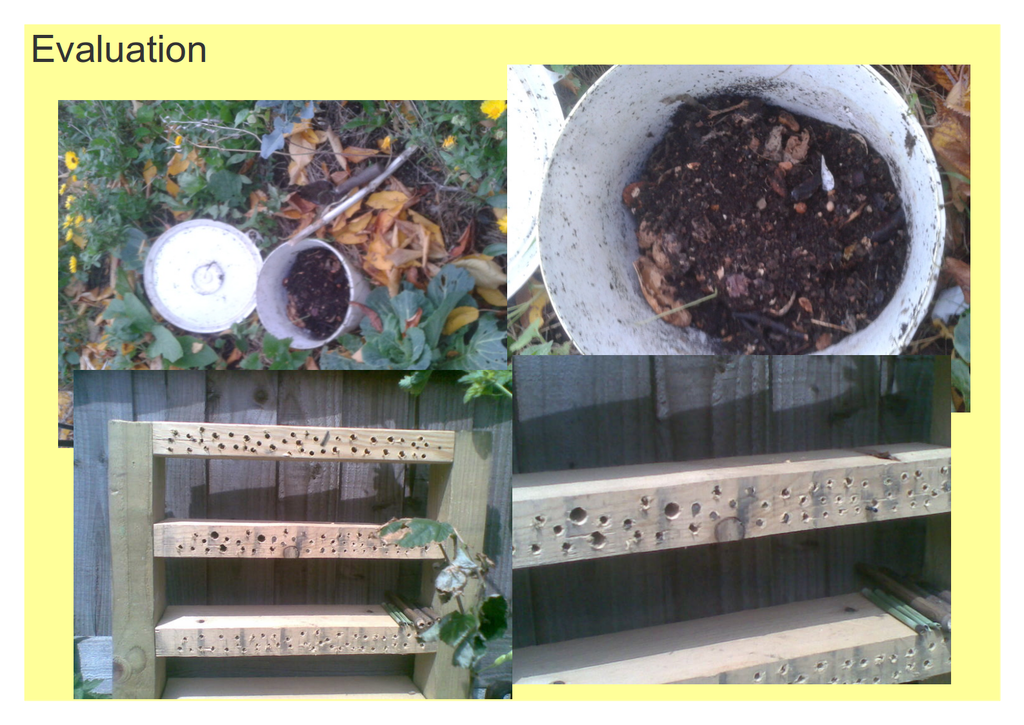
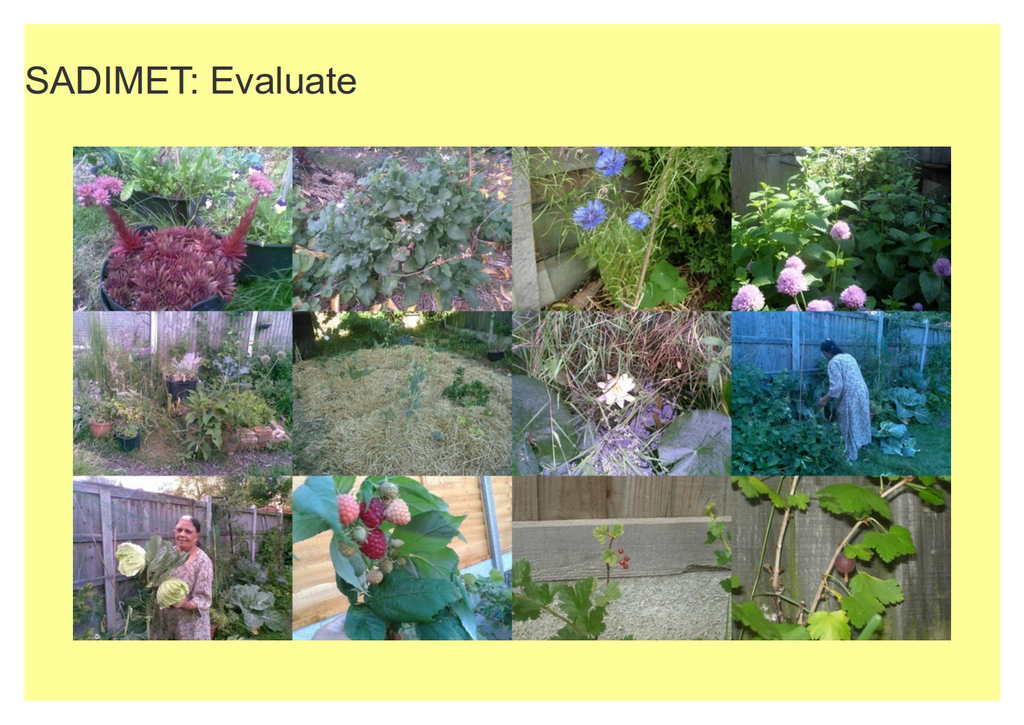
Manage Evaluate and Tweak
Once established the system largely manages itself. Ongoing work focuses on observation small adjustments and enjoying the yields.