

Overview
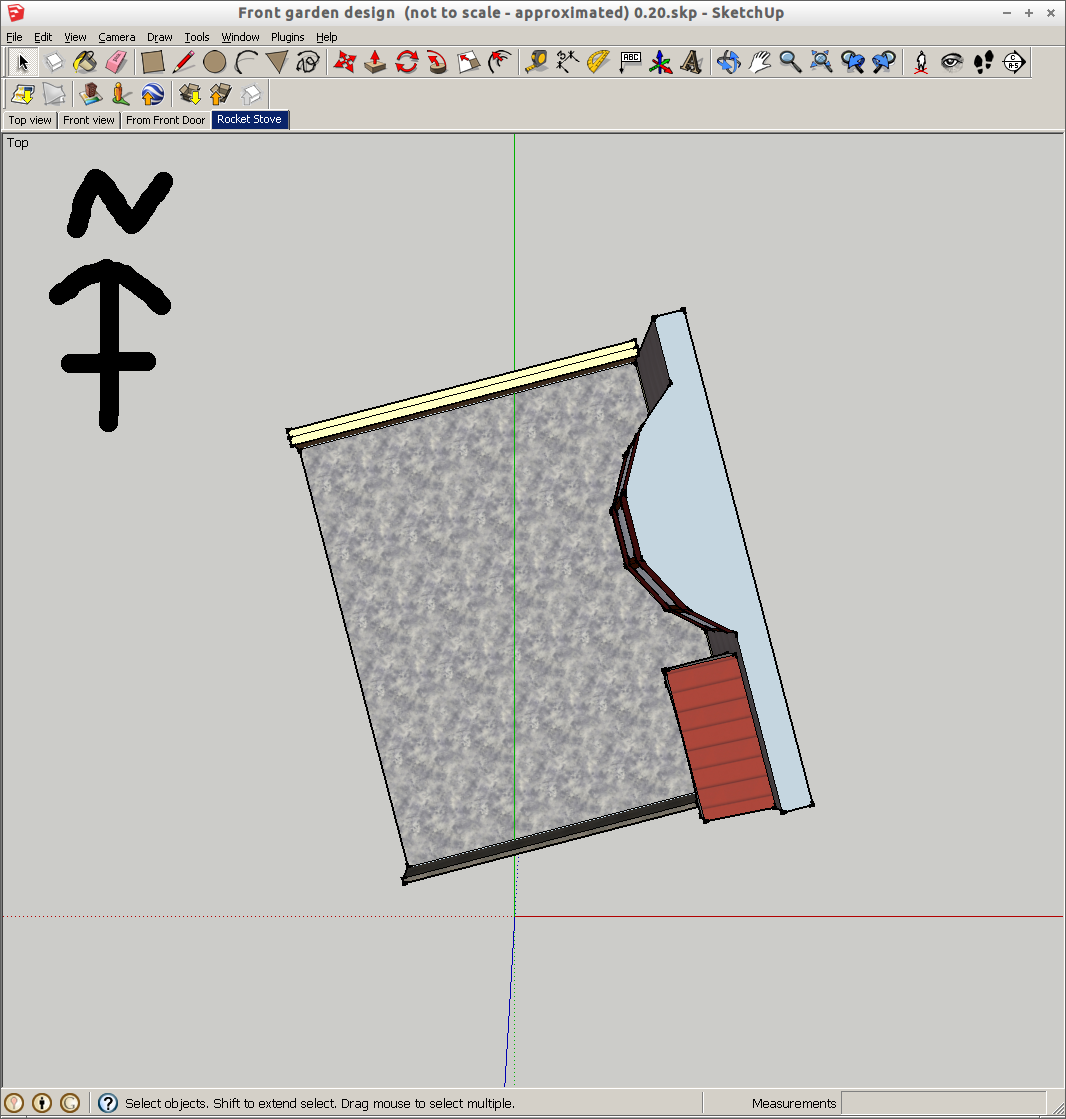
Like many suburban front gardens, this one had been paved over to accommodate cars — a common change made when households owned multiple vehicles. Now that nobody in the household owns a car, the large concrete surface serves little purpose except to make the street feel colder and less alive.
This design explores how a small front garden can restore colour, food production and neighbourly interaction. In the 1970s, most residents on this street knew nearly everyone living nearby. Today that sense of community has largely disappeared. Because front gardens face the street and remain visible to passers-by, they offer a valuable opportunity to rebuild small acts of connection.
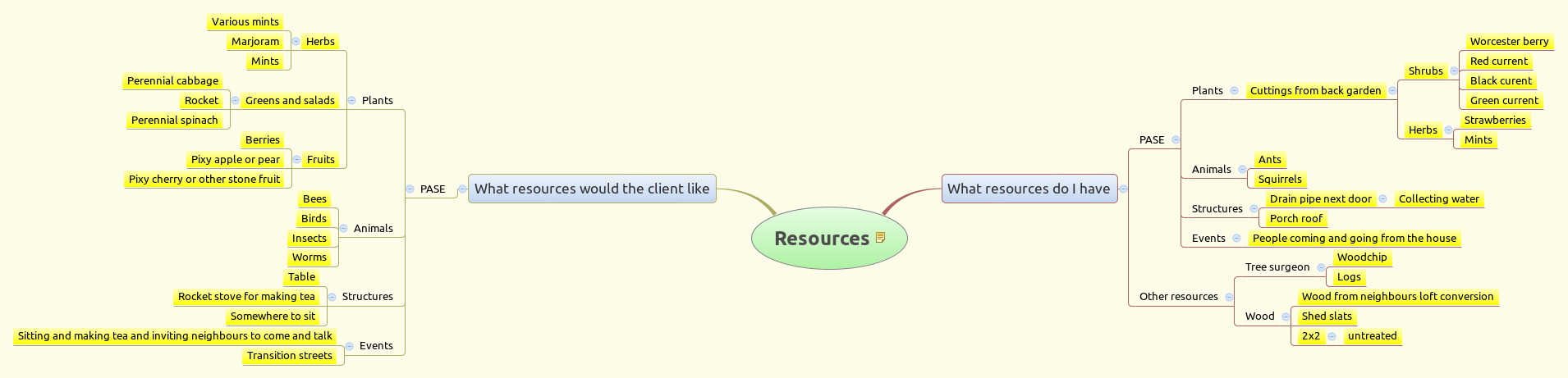
The intention is to create a space where herbs and edible plants are clearly labelled so neighbours can harvest small amounts when needed — turning a private garden into a subtle shared resource.
Methodology
Having previously found OBREDIM challenging compared with other permaculture design processes, I chose to use it again for this project to deepen my understanding and practise applying it at a smaller scale.
Working Through the Design
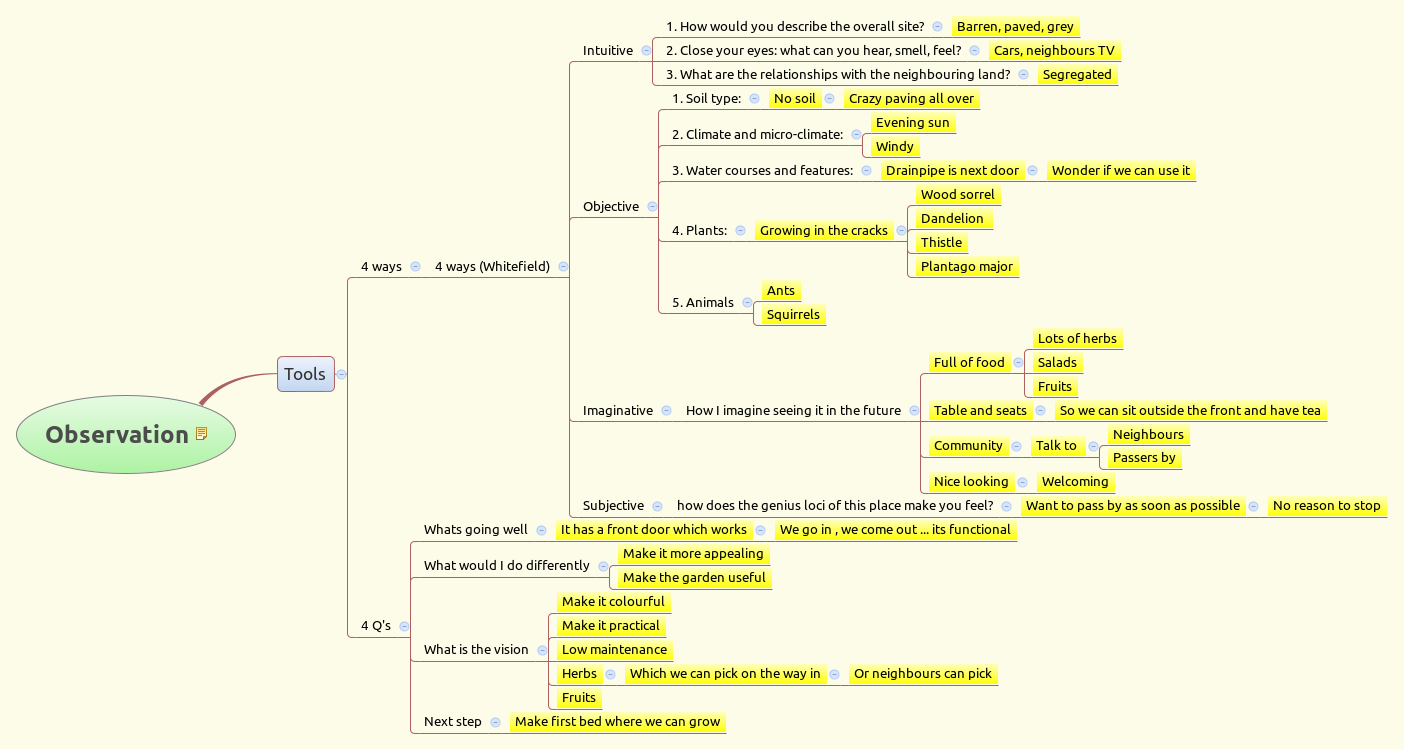
Observation — Reading the Site
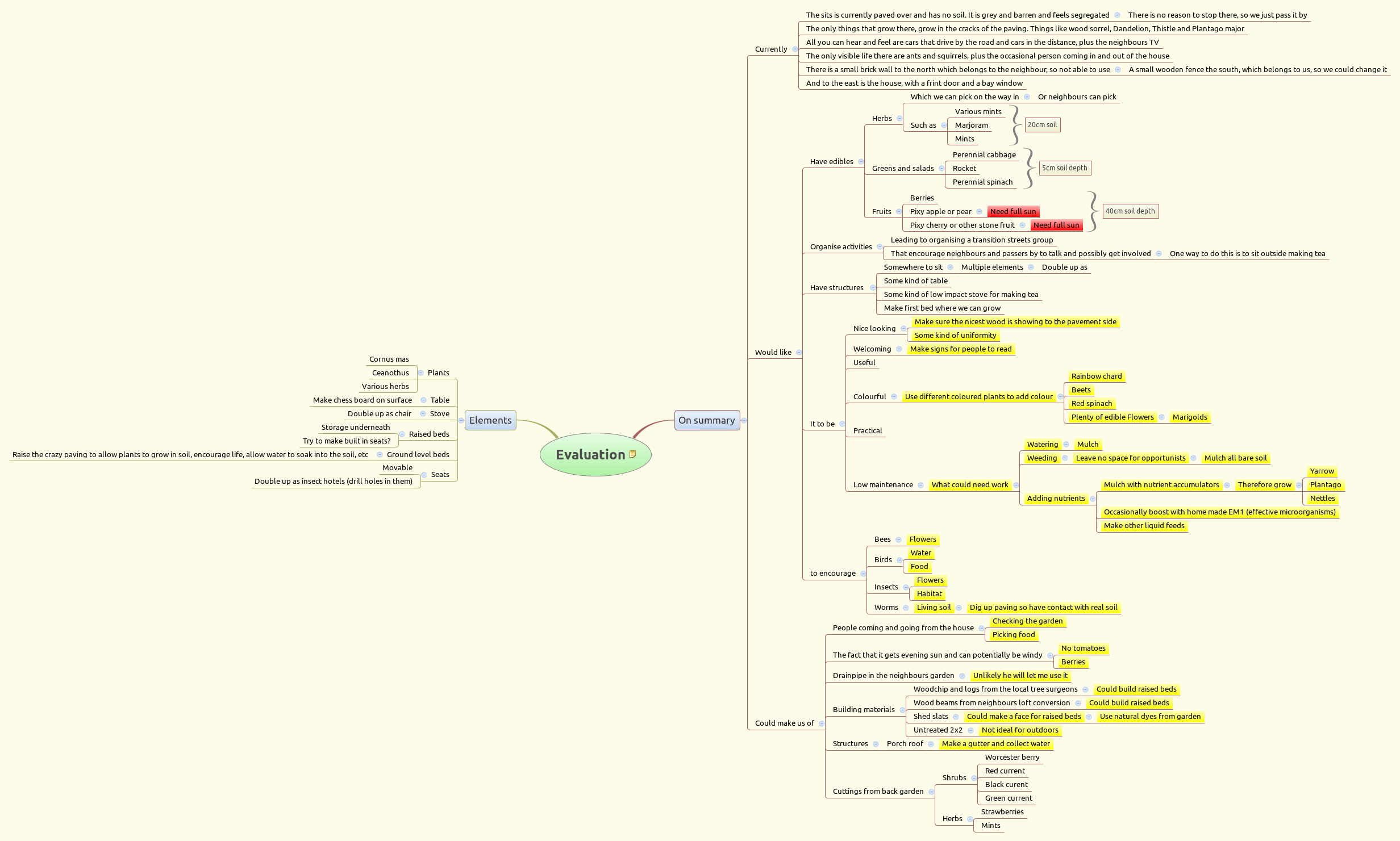
The existing site is almost entirely lifeless: a paved surface with no vegetation and little habitat value. The garden receives afternoon and evening sun but is shaded in the morning due to its east-facing aspect. It is also exposed to wind, which significantly influences plant selection and layout decisions.
Boundaries & Resources
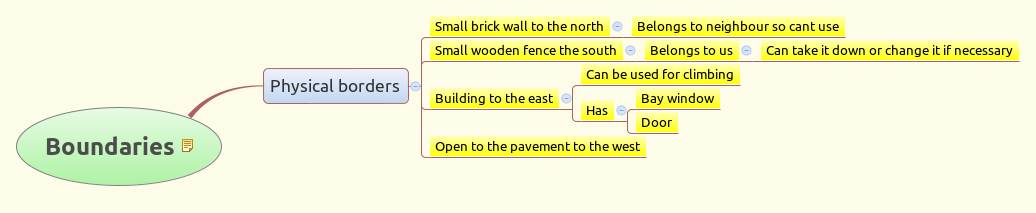
The most interesting boundary is the edge between the garden and the pavement, where interaction with neighbours and passers-by occurs. Two surrounding walls create useful vertical surfaces for climbing plants, increasing growing space without reducing the small ground area.
Because the garden is highly visible from the street, aesthetics become an important design consideration alongside productivity.
Evaluation — Wind, Sun & Soil
Evaluation confirmed that several initially considered plants would struggle under the site's windy conditions and partial sun. Improving soil fertility and protecting plants from wind exposure therefore became central elements of the design.
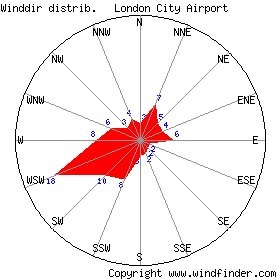
Wind statistics
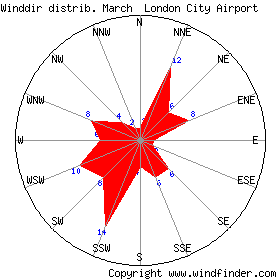
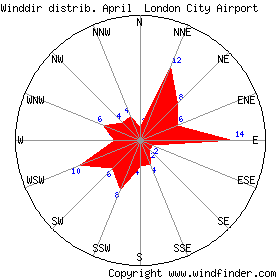
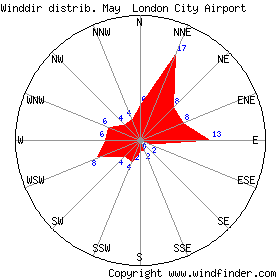
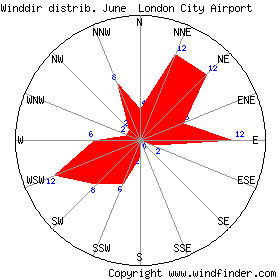
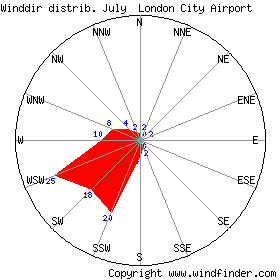
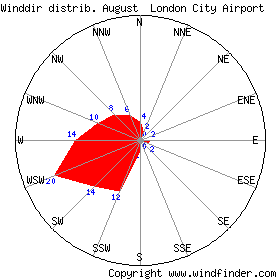
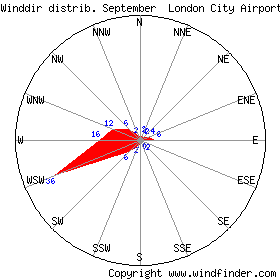
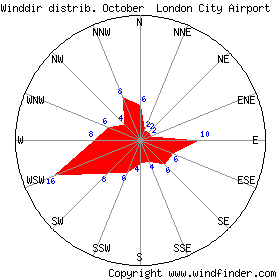
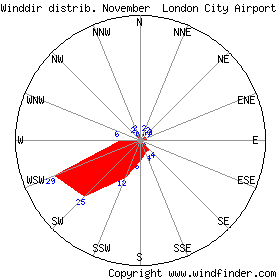
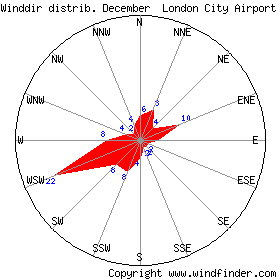
Wind data was sourced from London City Airport, approximately 3 miles from the site. The annual rose shows that the prevailing winds arrive predominantly from the south-west, with secondary flow from the west and north-east. This is a typical pattern for lowland London, driven by the Atlantic weather systems that cross the UK throughout the year.
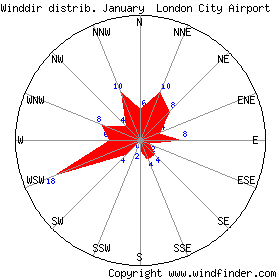
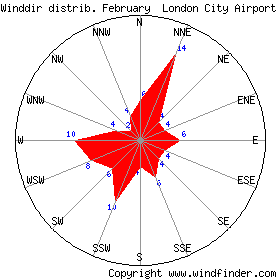
The monthly roses reveal seasonal variation. South-westerly flow is strongest and most consistent from October through to March. Summer months show weaker and more variable winds, with easterlies becoming more common between April and June. For plant selection this matters: taller or more fragile plants are more vulnerable during the autumn and winter months, while summer conditions are considerably more sheltered.
The existing wall on the south-west boundary provides some protection, but is low enough that it does not significantly deflect prevailing winds across the main growing area. Wind shelter planting or a taller structure on that boundary would meaningfully improve growing conditions for less robust species.
Zone Analysis
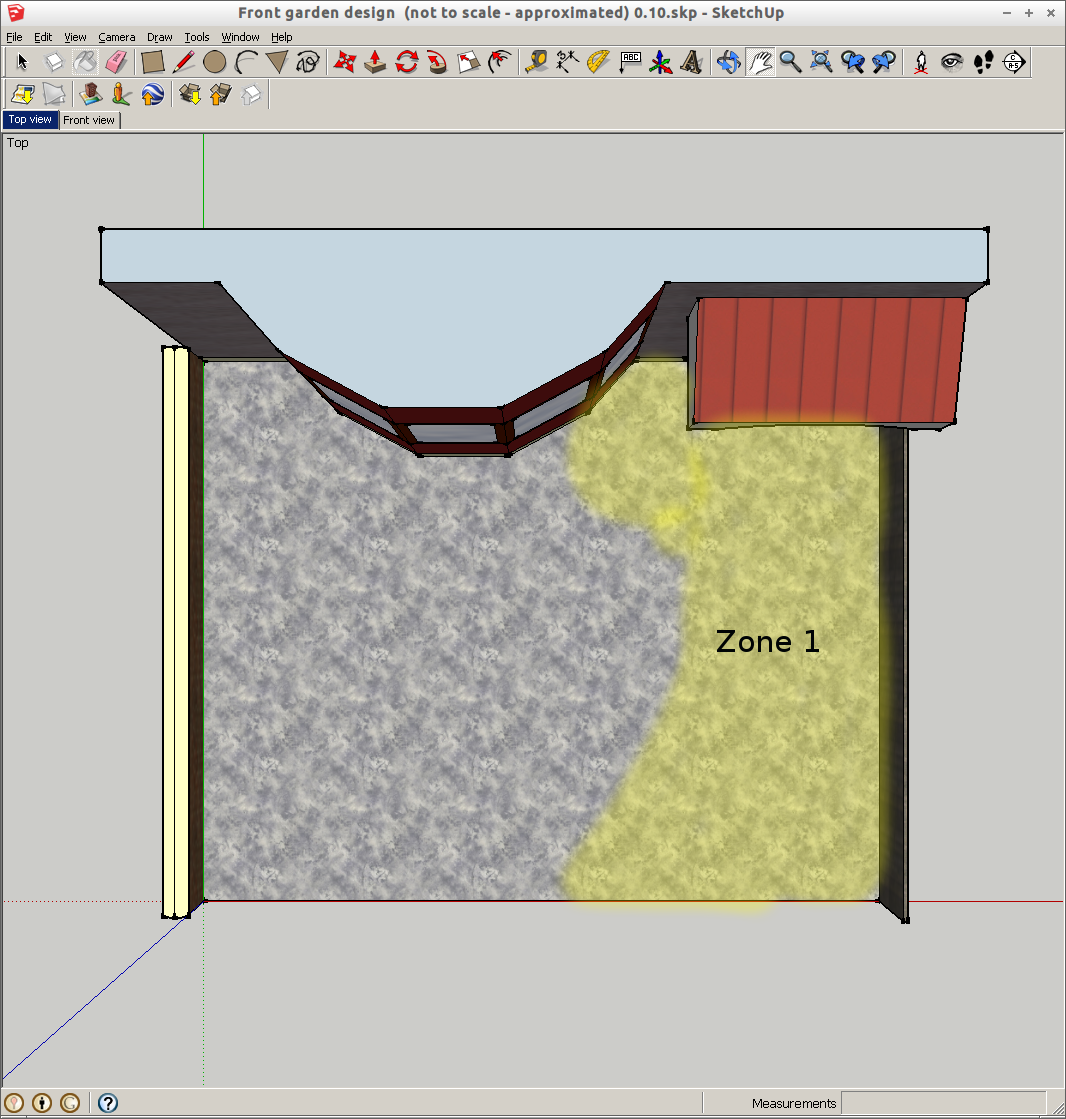
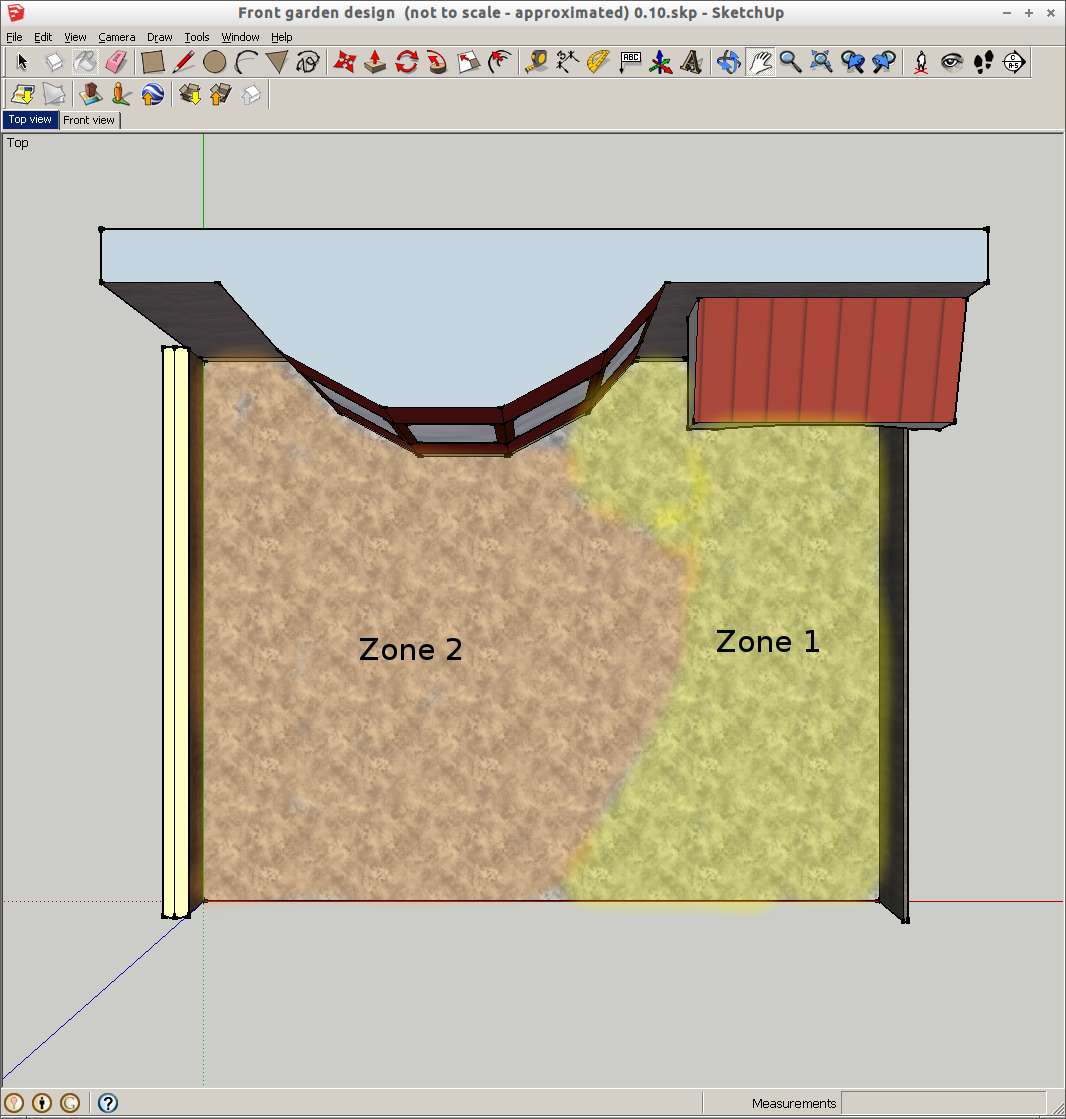
Permaculture zones are defined by how frequently an area is visited and how intensively it is managed. Zone 1 sits closest to the house and contains elements that need daily attention — harvesting, watering, observation. Zone 2 is visited regularly but less often, and tends to contain plants that are more self-sufficient.
Due to the small size of this site, only zones 1 and 2 are present. The entrance area immediately adjacent to the front door functions as zone 1: this is where the most frequently harvested herbs are placed, so they can be picked on the way in or out without a dedicated trip. The remainder of the garden falls into zone 2, containing slightly larger plants, the Cornus mas tree and the rainwater barrels.
The zone boundary in a front garden is less defined than in a back garden or larger site — the whole space is small enough to cross in a few steps. However, deliberately placing the highest-use plants nearest the door reinforces good harvesting habits and keeps the most visible part of the garden looking well-tended.
Design — Layout & Elements
The design places a Cornus mas (Cornelian cherry) tree toward the back of the garden so it does not shade the remaining beds. Its early spring blossom provides a nectar source before most other plants flower, while the edible berries ripen in late summer. A raised herb bed close to the pavement encourages neighbours to harvest small quantities of herbs when needed.
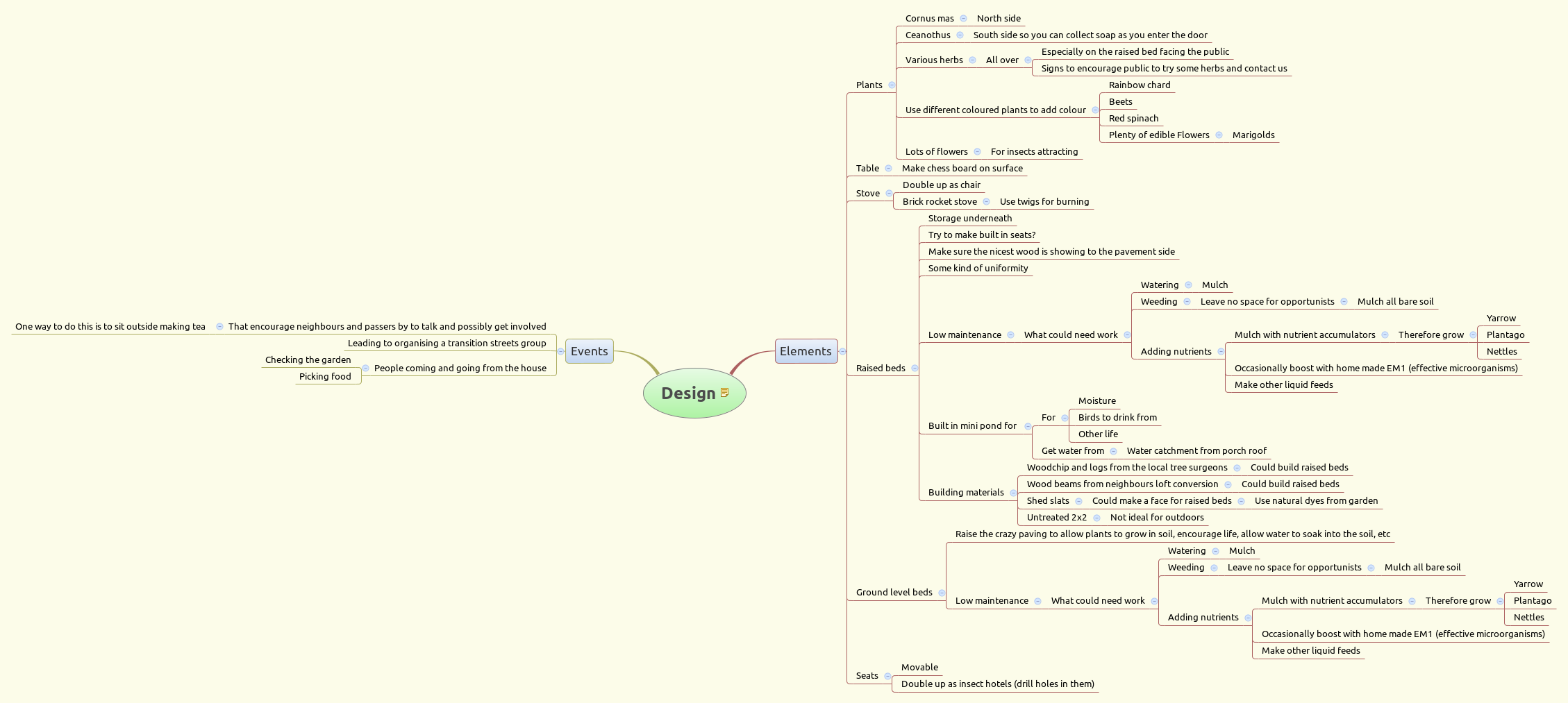
3D Design Views
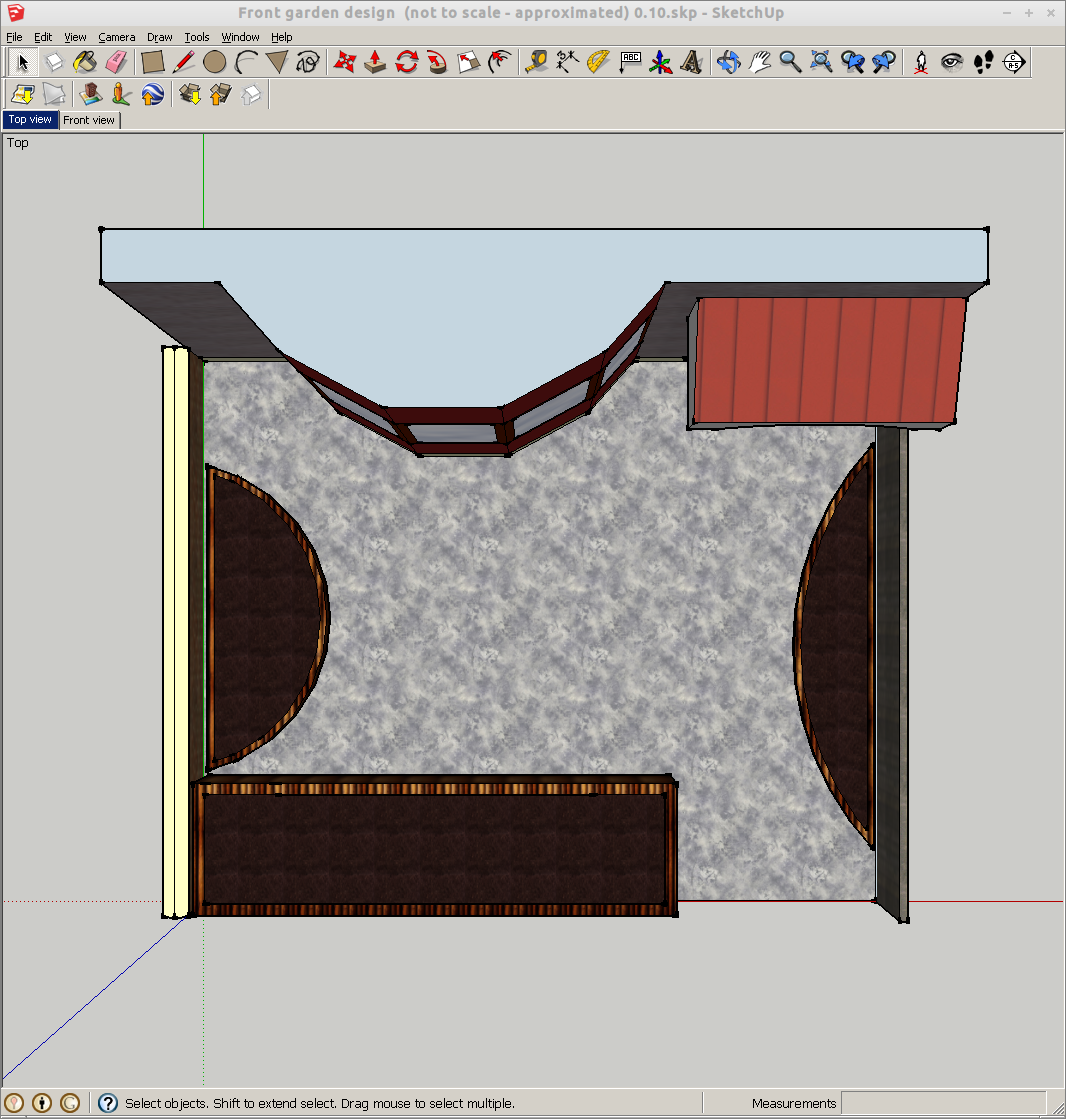
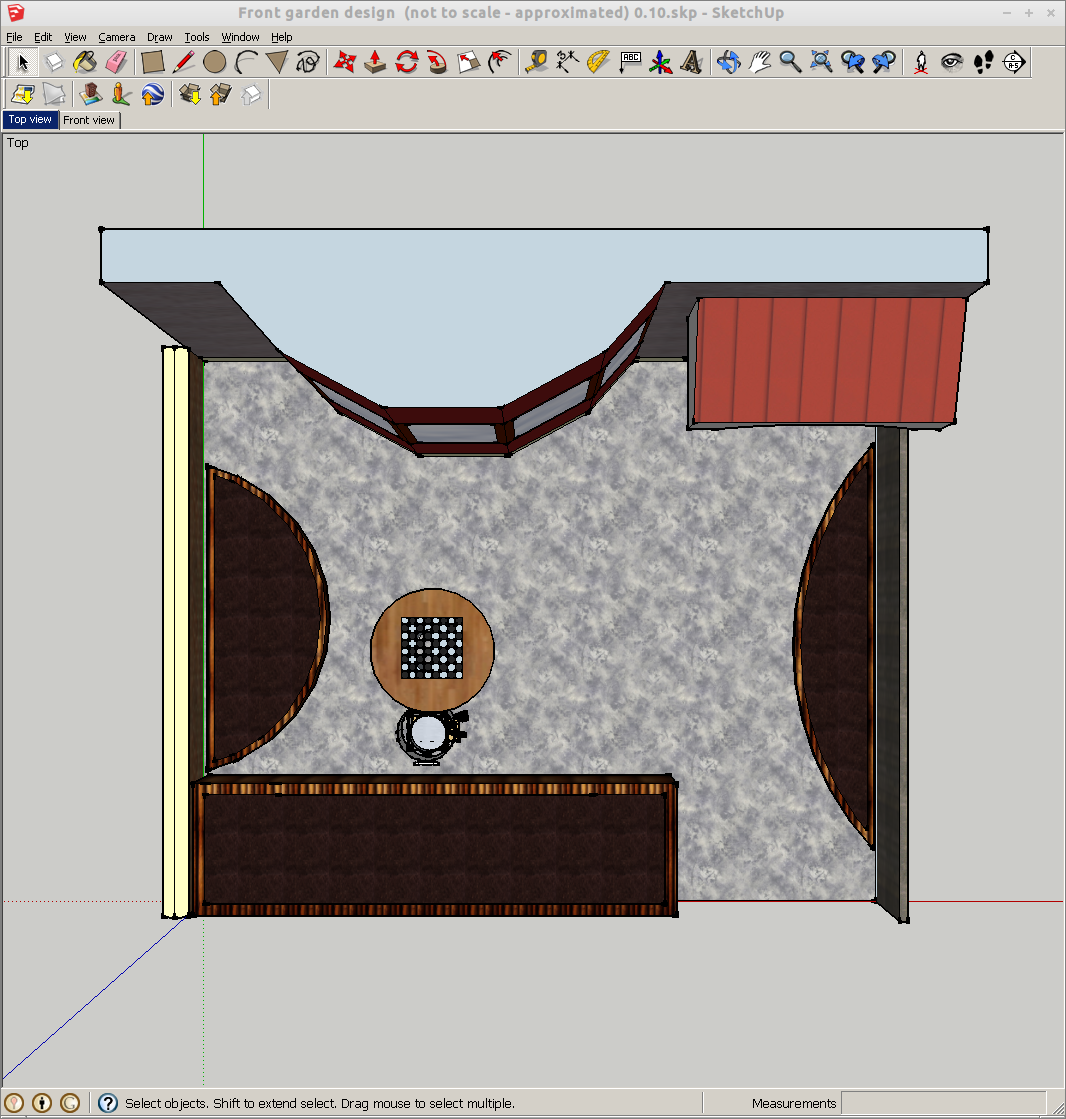
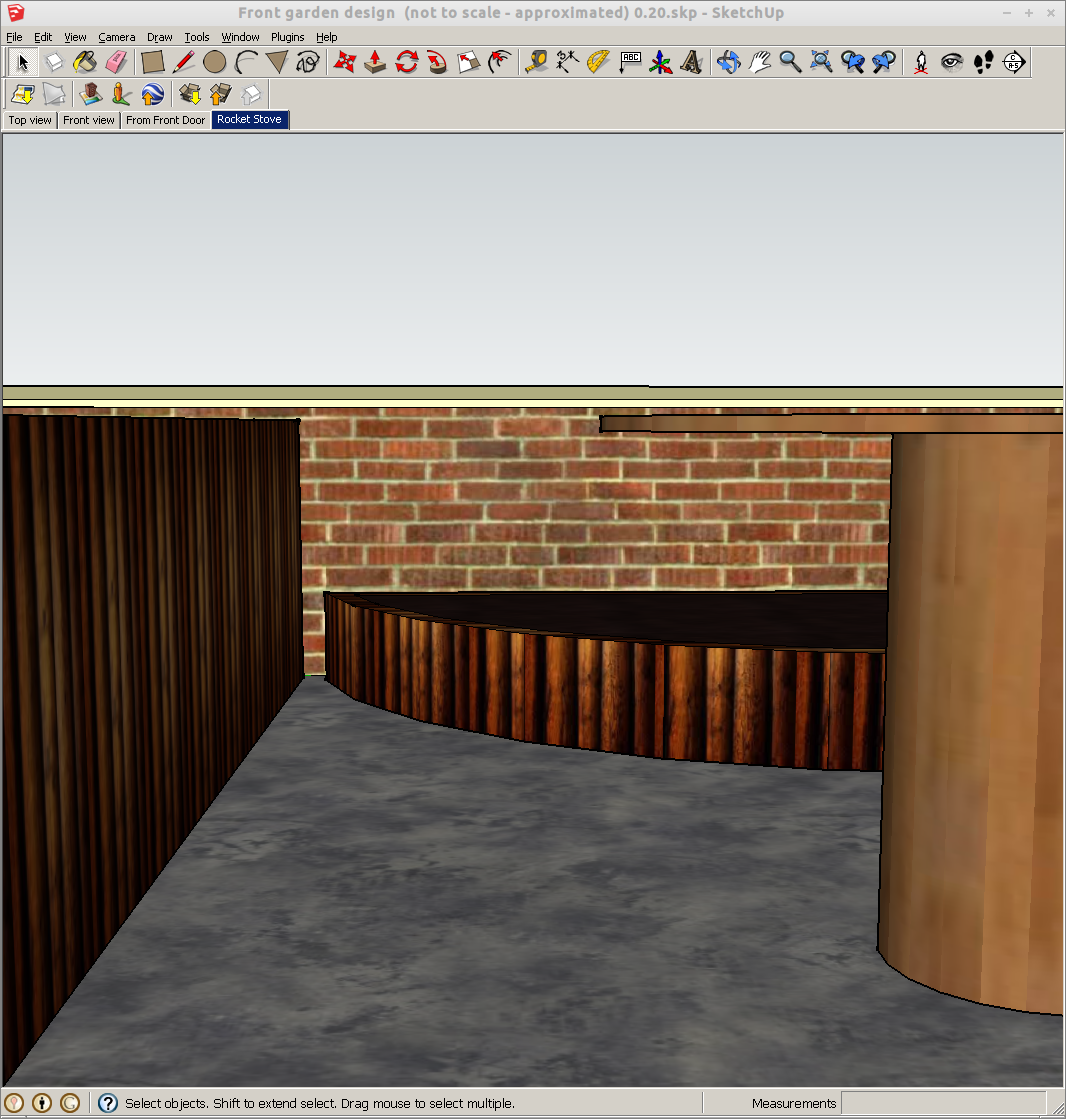
The design was modelled in SketchUp to explore how the layout would feel from street level and from the front door. Seeing the space in three dimensions helped test whether the raised bed and tree would obstruct sight lines, and gave a sense of how the garden would appear to passing neighbours — an important consideration given the community-sharing intent of the design.
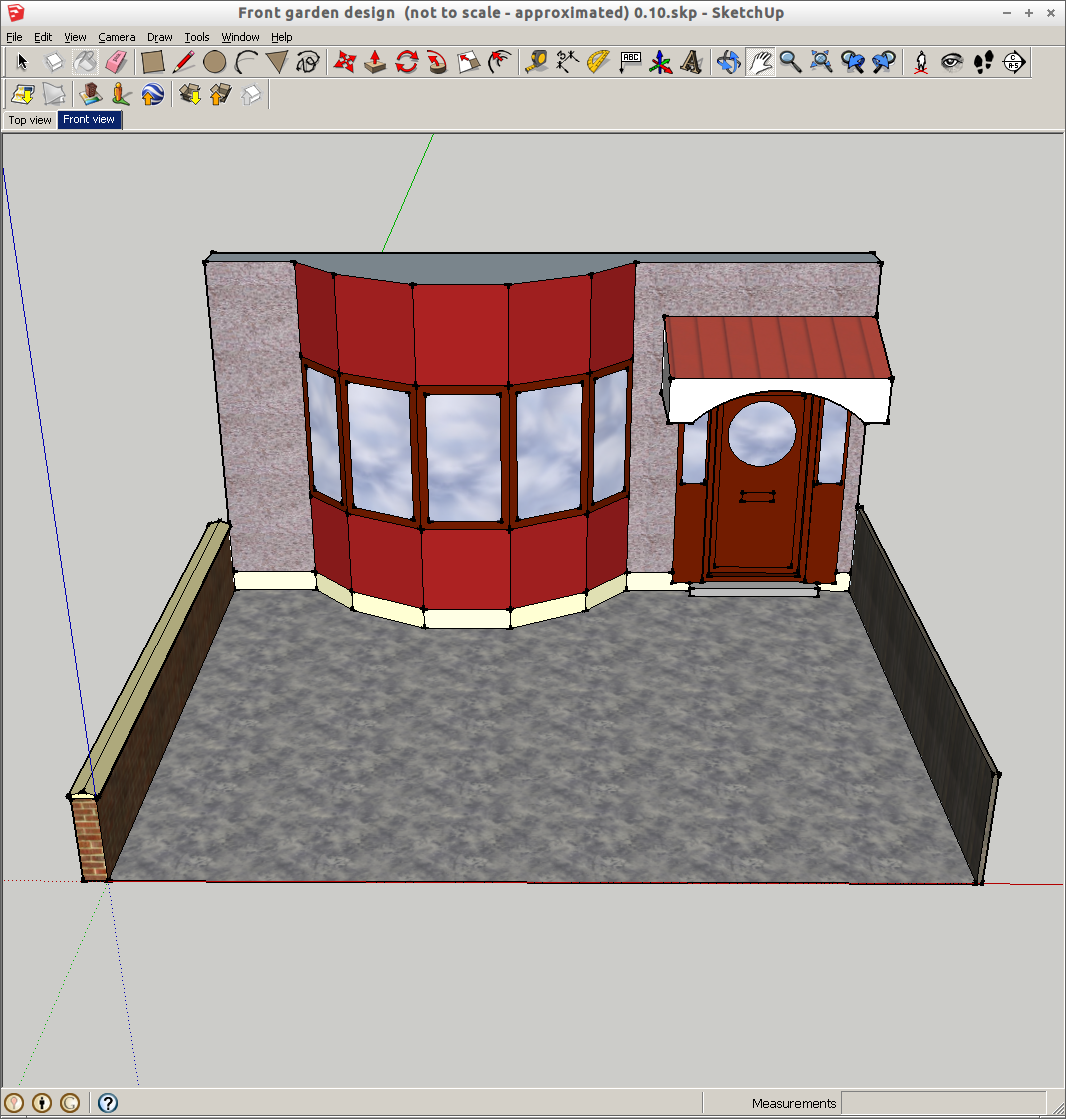
Design Build-Up
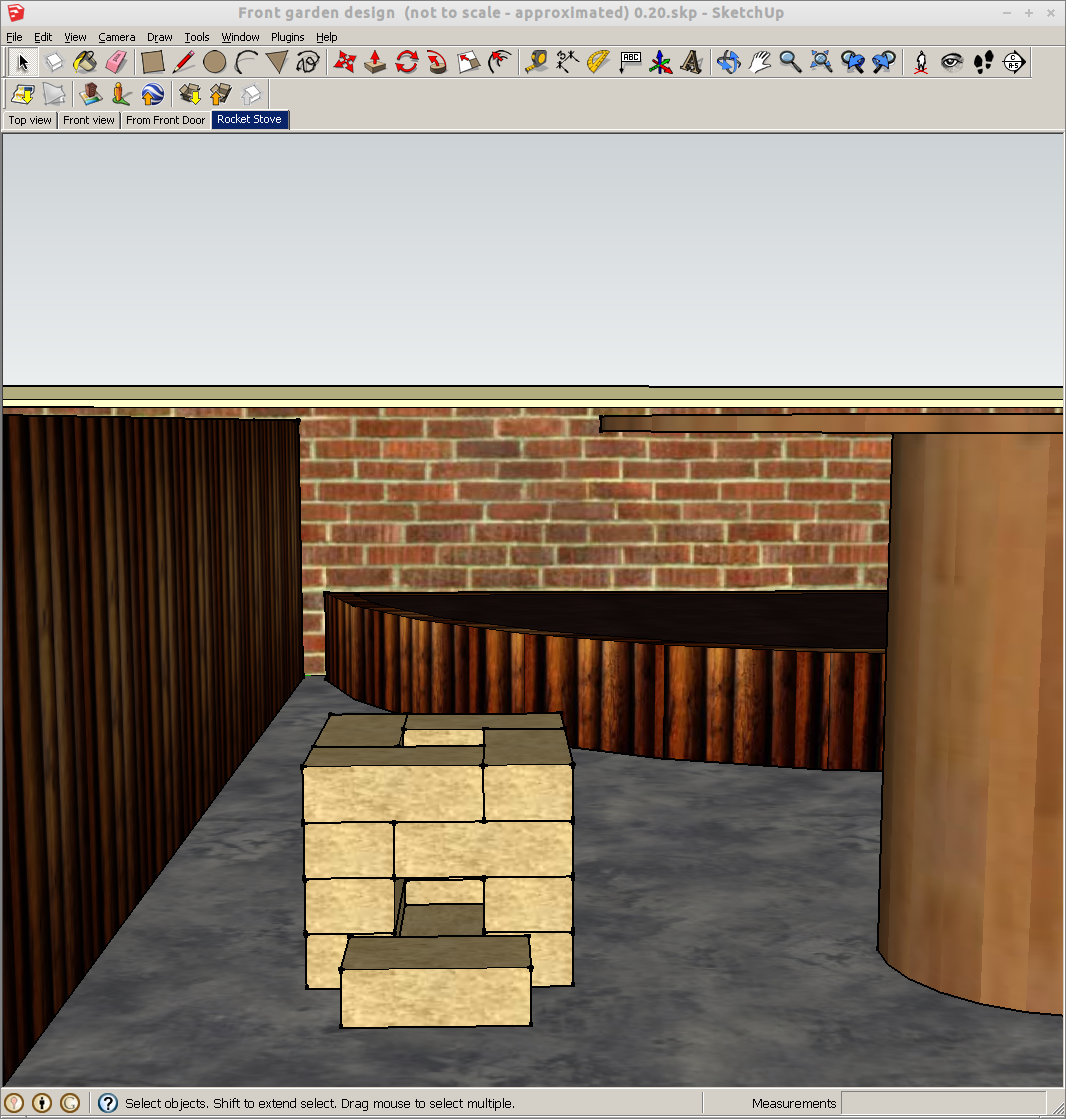
The sequence below shows how the design layers were added incrementally — from the cleared base through to the final planting and stove positions.
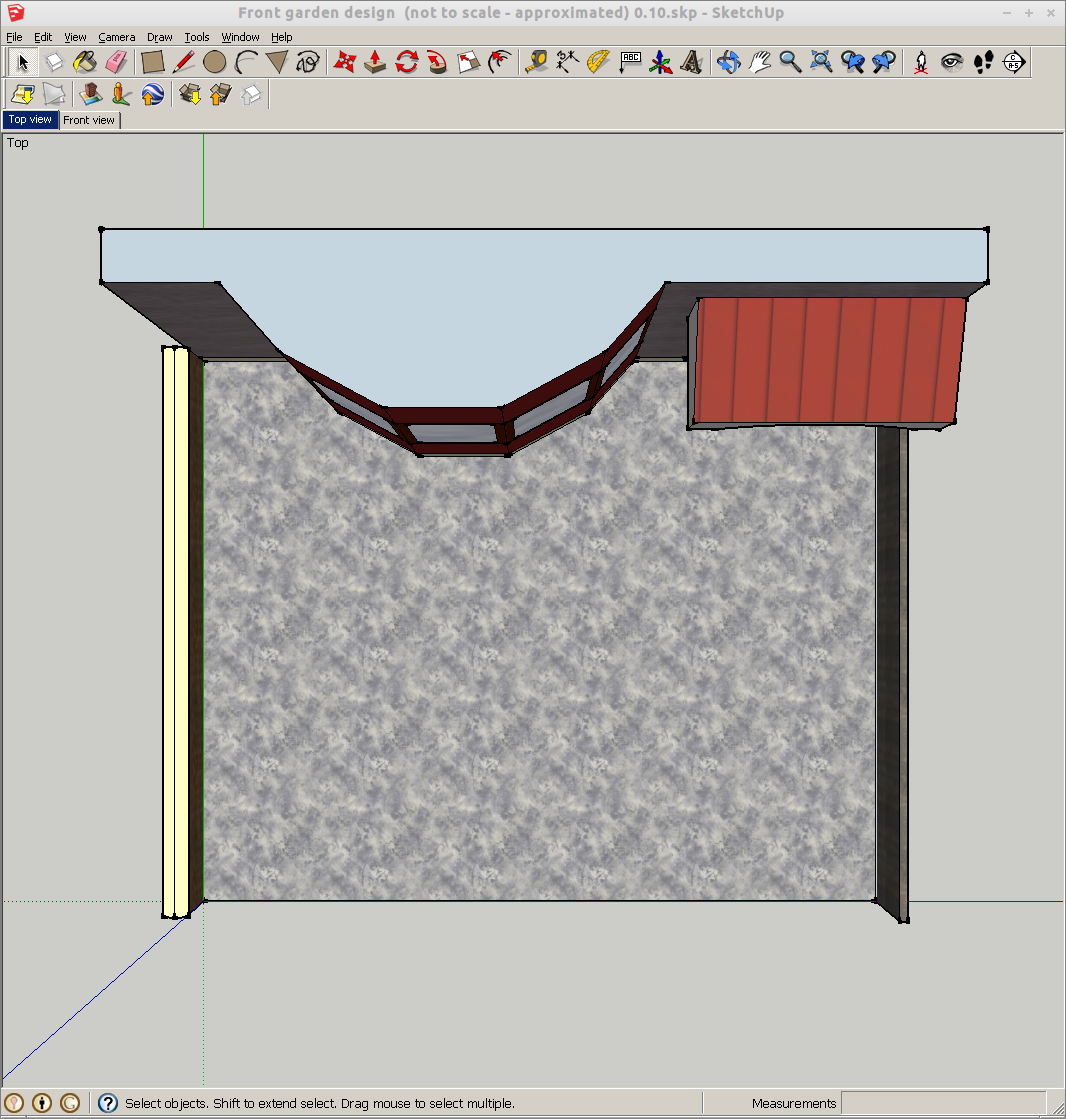
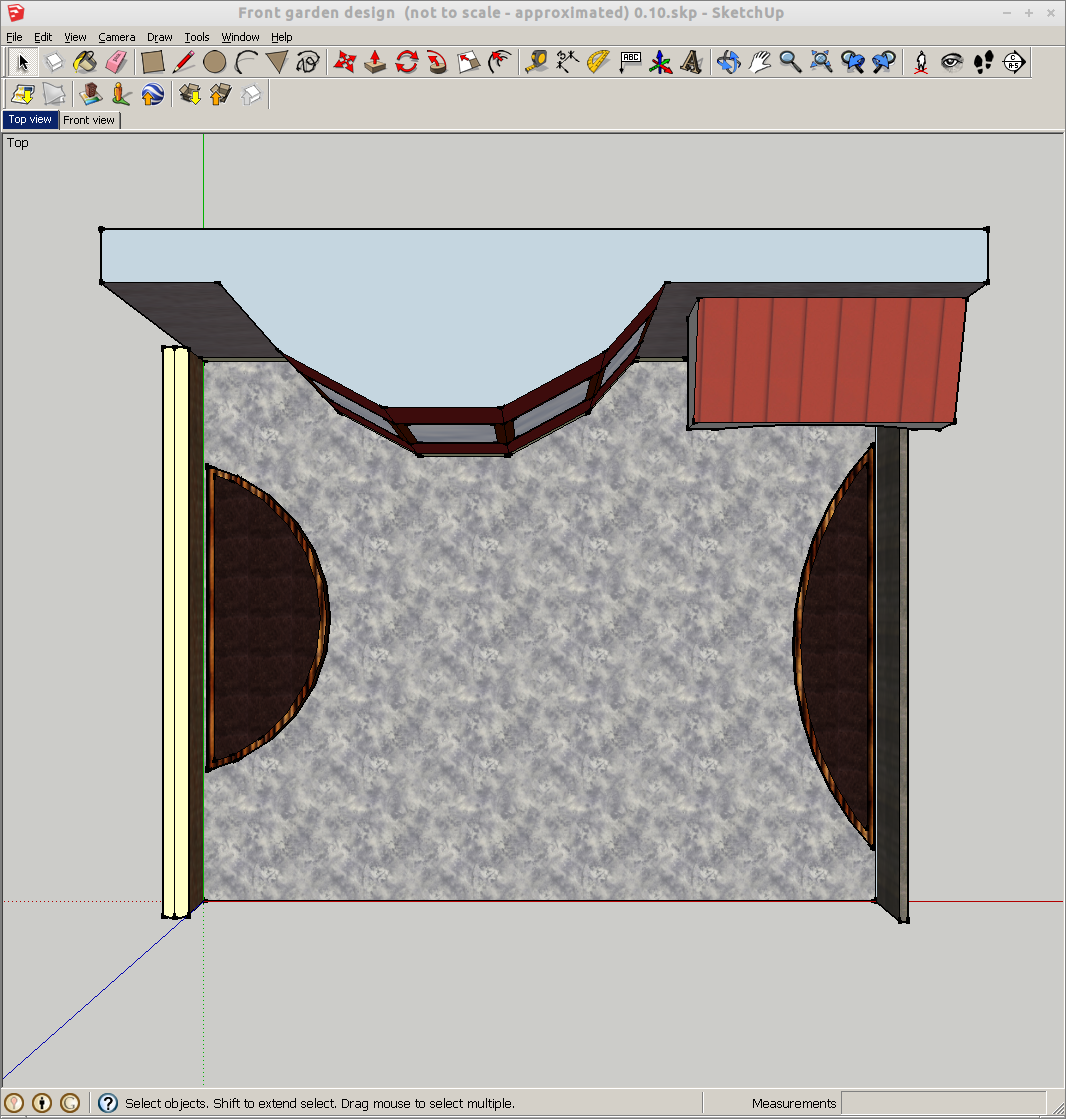
The Rocket Stove
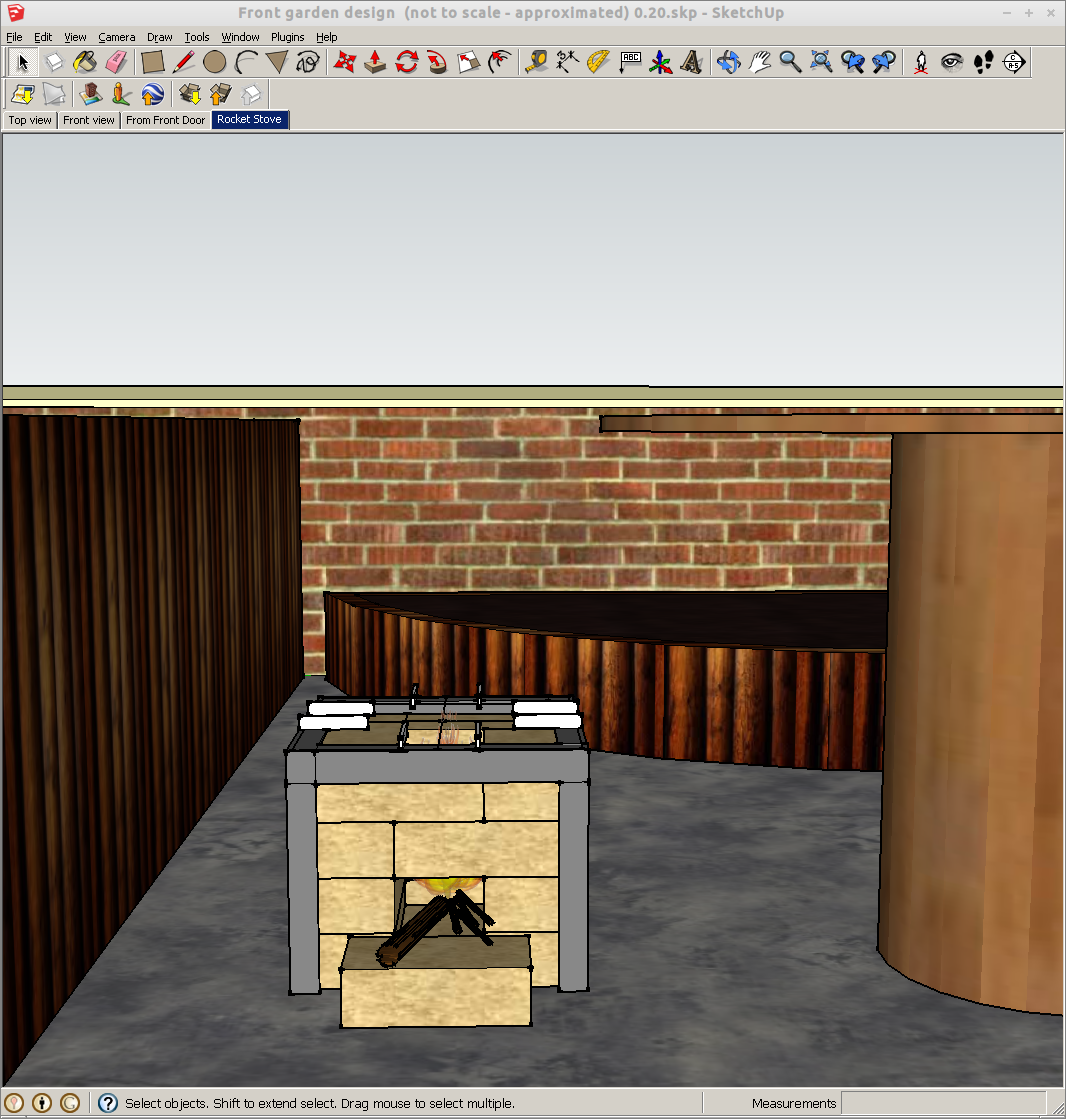
A small rocket stove is included to allow occasional outdoor cooking using small-diameter wood fuel. The L-shaped combustion chamber draws air efficiently, producing very little smoke and generating high heat from minimal fuel.
Implementation Plan
Implementation involves removing sections of paving, constructing planting beds, installing rainwater harvesting from the porch roof and adding seating alongside a small rocket stove for occasional outdoor cooking.
Reflections & Outcomes
This design demonstrates how even a small paved suburban front garden can be transformed into a productive and socially engaging landscape. Working through OBREDIM a second time clarified how important the evaluation stage is at this scale — site conditions like wind exposure and partial shade ruled out a significant number of plants before the design stage even began, making the eventual layout more considered and realistic.