
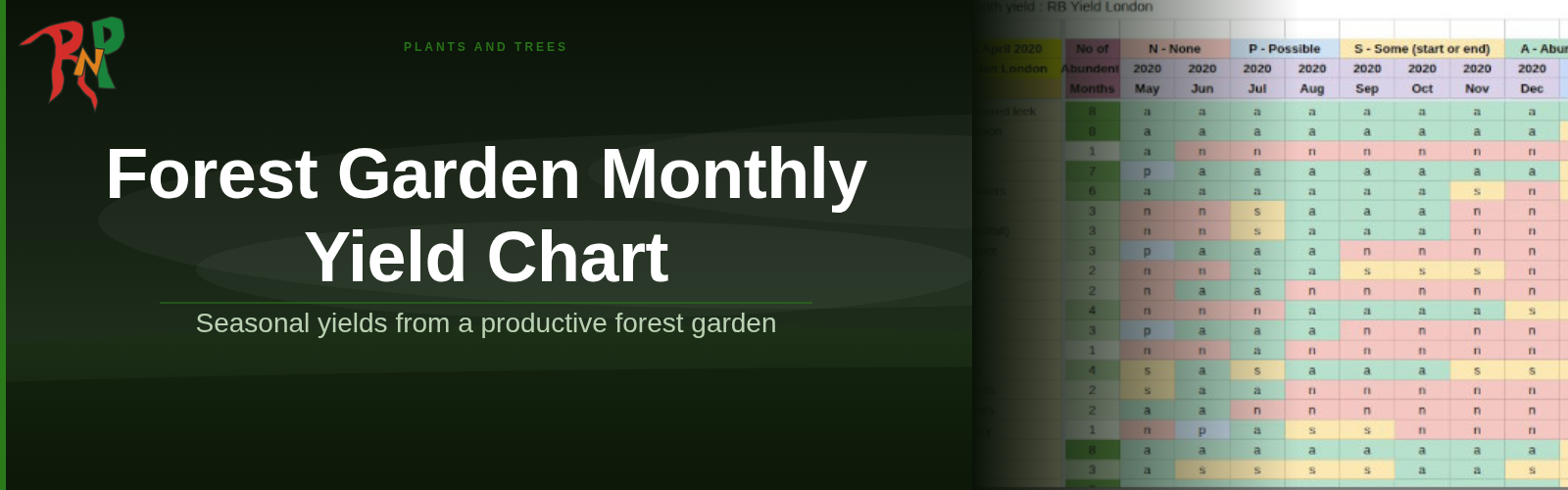
Forest Garden Monthly Yield Spreadsheet
This page shares the full month-by-month harvest data from a small back garden forest garden. The garden had been neglected for seven years before being reclaimed and managed using permaculture principles during the COVID lockdown year.
Over the following twelve months the garden produced approximately 80% of household food. The spreadsheet below records when crops were available and how abundant they were throughout the year. It provides a practical example of how a diverse forest garden can produce food across the seasons rather than concentrating harvests into a short summer peak.
What the Harvest Data Shows
The dataset highlights several patterns typical of productive forest gardens:
- Spring harvests from perennial vegetables, herbs, and early greens
- Summer abundance from fruits, berries, and annual crops
- Autumn harvests from tree fruit, late vegetables, and storage crops
- Winter resilience supported by hardy greens and stored produce
Because forest gardens combine multiple layers of plants — trees, shrubs, perennials, and groundcovers — they can provide food throughout much of the year. The spreadsheet illustrates how seasonal diversity spreads harvests across many months rather than concentrating them into a single growing season.
Understanding the Spreadsheet
The spreadsheet uses simple symbols to indicate harvest levels:
- N – None
- P – Possible: the crop may not have produced this year but can yield in other years
- S – Some (available at the start or end of the season)
- A – Abundant
- ? – No data collected
These indicators make it easier to quickly compare crop availability across months and see how different plants contribute to a year-round food supply.
Forest Garden Harvest Calendar
Explore the full spreadsheet below to see how different crops performed across the seasons.
Using the Data for Garden Planning
This harvest calendar can help gardeners understand how different crops contribute to year-round food production. By comparing seasonal availability, you can design a forest garden that spreads harvests across the year and reduces seasonal gaps in production.
Observing when crops are abundant, scarce, or absent can also help identify opportunities to introduce new plants that extend the harvest season and improve overall resilience.