
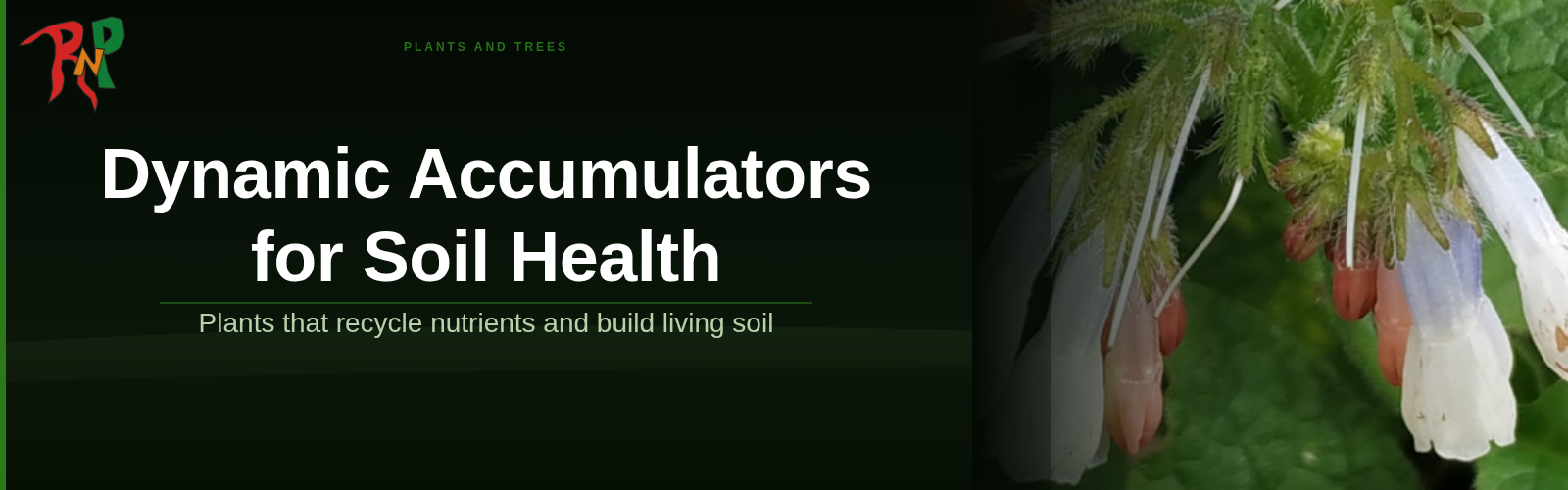
Dynamic accumulator plants are species that are believed to draw nutrients from deeper soil layers and concentrate them in their leaves and tissues. When these plants are cut and used as mulch, compost material, or green manure, the nutrients they contain are returned to the soil surface where other plants can access them.
Dynamic Accumulator Plant List
If you are looking for a comprehensive database of species used as dynamic accumulators in permaculture and forest garden systems, see the full plant list here:
Dynamic Accumulator Plant List for Permaculture and Forest Gardens →
This resource includes dozens of plants commonly referenced in permaculture literature, including species used for chop-and-drop mulch systems, compost production, and soil fertility management.
What Are Dynamic Accumulator Plants?
In permaculture systems dynamic accumulator plants help support nutrient cycling, soil fertility, and long-term ecosystem productivity.
Many dynamic accumulators have deep taproots that penetrate compacted soil layers and access minerals that shallow-rooted plants cannot easily reach. The leaves and stems of these plants can then be harvested and returned to the soil surface where they decompose and release nutrients.
These plants are commonly used as:
- Chop-and-drop mulch
- Compost ingredients
- Green manure
- Animal fodder
- Soil improvement plants
Dynamic accumulators are frequently used in permaculture design, orchards, and forest gardens to help maintain fertility within the system.
Dynamic Accumulators in Forest Garden Design
In forest garden systems dynamic accumulators are often planted near fruit trees or within plant guilds to help cycle nutrients through the system.
Typical uses include:
- Growing nutrient accumulators near fruit trees and using their leaves as mulch
- Cutting plants several times a year for chop-and-drop fertility
- Adding nutrient-rich foliage to compost systems
- Improving soil structure and organic matter
Commonly used plants include comfrey, nettle, dandelion, yarrow, and chicory, though many other species can provide similar ecological functions.
Notes on Dynamic Accumulators
The concept of dynamic accumulation comes from early permaculture observations and research. While many plants clearly contain significant mineral concentrations in their tissues, scientific evidence for nutrient accumulation varies between species.
However, many of these plants remain extremely useful in regenerative systems because they:
- Produce large amounts of biomass
- Support pollinators and beneficial insects
- Improve soil structure
- Contribute organic matter to soil
For these reasons dynamic accumulator plants are widely used in both permaculture design and forest gardening.
Using Dynamic Accumulators in Practice
When designing permaculture systems, dynamic accumulators are often combined with other functional plant groups such as:
- Nitrogen-fixing plants
- Groundcovers
- Pollinator plants
- Mulch plants and biomass producers
Together these plants help create self-fertilising ecosystems where nutrients are cycled through vegetation rather than relying on imported fertilisers.